
The Ultimate Guide on How to Prune a Fiddle Leaf Fig for Fuller, Healthier Growth
Few indoor plants capture attention like the Fiddle Leaf Fig (Ficus lyrata). With its large, glossy leaves and tree-like structure, it can instantly elevate any space.
But as beautiful as it is, this tropical plant can become tall, leggy, or uneven over time.
That’s why learning how to prune a fiddle leaf fig properly is essential for maintaining its shape, promoting bushier growth, and ensuring long-term health.
This detailed guide will walk you through everything you need to know—from the best pruning techniques and timing to common mistakes to avoid—so you can keep your fiddle leaf fig thriving and looking stunning year-round.

Why Pruning Is Essential for a Fiddle Leaf Fig
Pruning isn’t just about aesthetics—it’s about encouraging healthier growth. When you prune a fiddle leaf fig, you’re guiding its energy into producing new leaves and branches.
It also helps remove damaged areas, improves airflow, and prevents the plant from becoming too tall or lopsided. Proper pruning can transform a leggy plant into a lush, well-balanced centerpiece.
When Is the Best Time to Prune a Fiddle Leaf Fig?
Timing plays a major role in successful pruning. The best period to prune your fiddle leaf fig is during its active growing season, which is typically spring through early summer.
During this time, the plant recovers quickly and produces fresh growth.
Avoid pruning during winter or dormancy since the plant’s energy levels are lower. Pruning then can cause stress and slow regrowth.
Tools You’ll Need for Pruning
Before starting, make sure you have the right tools for a clean, safe pruning session:
-
Sharp pruning shears or scissors – to make clean cuts without tearing.
-
Rubbing alcohol or disinfectant wipes – to sterilize blades before and after use.
-
Gloves – fiddle leaf figs release a white sap that can irritate skin.
-
Paper towels or cloth – to wipe away excess sap after cutting.
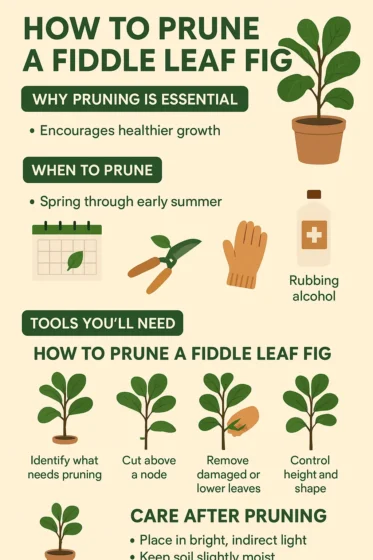
How to Prune a Fiddle Leaf Fig: Step-by-Step Guide
Proper technique is key for healthy regrowth and a balanced plant. Follow these steps to prune your fiddle leaf fig like a pro.
Step 1: Identify What Needs Pruning
Start by studying your plant’s structure. Look for damaged, yellowing, or browning leaves, as well as branches that cross or grow awkwardly. Decide whether you want to shape your plant into a tree form (single tall trunk) or a bushier shape with more branches.
Step 2: Cut Above a Node
A node is a small bump or ring on the stem where new leaves or branches can sprout. When you prune just above a node, it encourages new side growth from that point. Always make your cuts at a slight angle to prevent water from sitting on the wound and causing rot.
Step 3: Remove Damaged or Lower Leaves
If you notice older leaves near the bottom that look weak or yellow, trim them off at the base. This improves airflow and redirects the plant’s energy toward producing healthy upper foliage.
Step 4: Control Height and Shape
If your fiddle leaf fig has become too tall or leggy, cut the main stem to your desired height, ideally just above a node. Within a few weeks, you’ll notice new branches forming below the cut, resulting in a fuller, more balanced plant.
Step 5: Clean the Cuts
After pruning, wipe any sap from the cut areas with a damp cloth to prevent sticky residue. Allow the wounds to dry naturally—this seals the cuts and reduces the risk of infection.
Best Way to Shape Your Fiddle Leaf Fig
Shaping your fiddle leaf fig depends on your personal style and available space. For a tree-like appearance, remove the lower leaves gradually to reveal a clean trunk. For a bushy look, trim the top and outer edges to stimulate branching. Either way, pruning encourages multiple stems and a fuller canopy, giving your plant a lush, sculpted appearance.
Encouraging Branching After Pruning
To help your fiddle leaf fig branch out even more, apply gentle pressure near the nodes using your fingers or a small stick to “wake up” dormant buds. You can also use a technique called notching—making a shallow cut just above a node—to stimulate new growth. Within weeks, you’ll see new shoots emerging, giving your plant a denser look.
Caring for Your Fiddle Leaf Fig After Pruning
After pruning, your fiddle leaf fig needs a bit of extra care to recover and grow strong.
-
Light: Place it in bright, indirect sunlight for steady growth.
-
Water: Keep the soil slightly moist but not soggy. Overwatering can lead to root rot.
-
Humidity: Fiddle leaf figs love humid environments, so mist occasionally or use a humidifier.
-
Fertilizer: About two weeks after pruning, feed with a balanced liquid fertilizer to support new growth.
Regular post-pruning care ensures your plant stays vibrant and resilient.
Common Mistakes to Avoid When Pruning
Even though pruning is simple, a few common errors can cause setbacks:
-
Cutting below a node: This prevents new branches from forming. Always prune just above one.
-
Over-pruning: Removing too much at once can shock the plant. Limit pruning to about 10–20% of total foliage.
-
Using dull or dirty tools: This can tear stems and introduce bacteria. Always sterilize before cutting.
-
Pruning during dormancy: Avoid trimming in winter when growth is slow.
How Often Should You Prune a Fiddle Leaf Fig?
You don’t need to prune constantly. Typically, once or twice a year is enough. Light trimming throughout spring and summer helps maintain shape, while major pruning once a year can control height and encourage branching. Always observe your plant’s growth before deciding to prune again.
Tips for Keeping Your Fiddle Leaf Fig Healthy Year-Round
-
Rotate regularly so all sides get equal light exposure.
-
Dust the leaves with a damp cloth to improve photosynthesis.
-
Avoid drastic changes in temperature or humidity.
-
Use well-draining soil to prevent water buildup.
-
Repot every 1–2 years to give roots more space and fresh nutrients.
Consistent care and light pruning will keep your fiddle leaf fig in peak condition all year long.
Rejuvenating an Overgrown or Leggy Fiddle Leaf Fig
If your fiddle leaf fig has grown tall with sparse leaves, rejuvenation pruning can bring it back to life. Cut the main stem down to your preferred height, just above a node. This will trigger multiple new branches, giving your plant a fuller and more vibrant structure. Combine this with proper lighting and nutrition to promote steady, even growth.
Preventing Shock After Pruning
It’s common for fiddle leaf figs to experience mild stress after pruning. To minimize shock, avoid moving the plant to a new location immediately, reduce watering for a week, and keep it in a stable, warm environment. Within a few weeks, you’ll see new growth that signals a healthy recovery.
FAQs About Pruning Fiddle Leaf Fig
1. Can I prune a fiddle leaf fig in winter?
It’s not recommended. Pruning in winter can stress the plant since it’s not actively growing. Stick to spring or early summer for best results.
2. Should I use pruning sealant on the cuts?
No. The plant naturally seals its cuts with sap, so applying a sealant isn’t necessary and can trap moisture.
3. How do I make my fiddle leaf fig grow branches?
Prune just above a node or try the notching technique. Both methods stimulate new branch growth.
4. Can I propagate cuttings from pruning?
Yes! Place the cut stem in water or moist soil, and roots will develop within a few weeks.
5. What happens if I never prune my fiddle leaf fig?
It may grow tall, top-heavy, or uneven. Without pruning, the plant can lose its shape and become difficult to manage indoors.
Final Thoughts
Pruning a fiddle leaf fig might seem intimidating, but once you understand the basics, it becomes second nature.
With clean cuts, proper timing, and regular maintenance, you’ll enjoy a plant that’s not only visually stunning but also healthier and longer-lasting.
A well-pruned fiddle leaf fig rewards you with lush, balanced growth and endless indoor charm—making it a true statement piece in any home.