15 Moss Wall Ideas for a Genuinely Lush, Low-Maintenance Accent
A moss wall brings genuine texture and a quiet, grounded feeling into a room that no framed art or paint color quite manages on its own.
The material itself splits into two real categories, preserved moss that needs zero water or light and living moss that needs both, and knowing which one fits your space changes every design decision that follows.
Below are 15 moss wall ideas built around real installation, light, and maintenance requirements that keep the finished piece looking genuinely lush for years.
1. Preserved Moss Accent Wall Panel
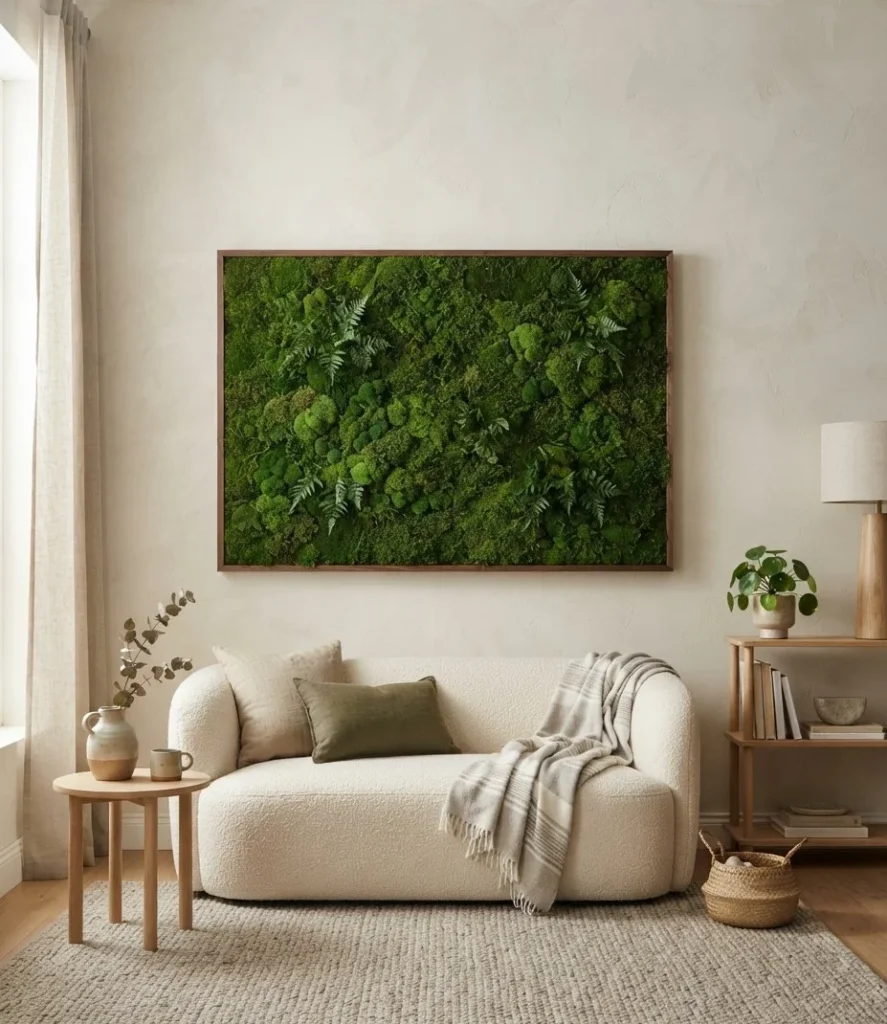
A full panel of preserved sheet and mood moss mounted directly to the wall creates a genuine focal point with essentially zero ongoing care, the moss is chemically treated with a glycerin solution that keeps it soft and vibrant without water or sunlight ever reaching it. This is genuinely the most beginner-friendly moss wall project on this entire list.
Keep the panel out of direct sunlight specifically, preserved moss holds its color for years in indirect light but fades and becomes brittle within months under direct sun exposure.
2. Living Moss Wall with Irrigation System
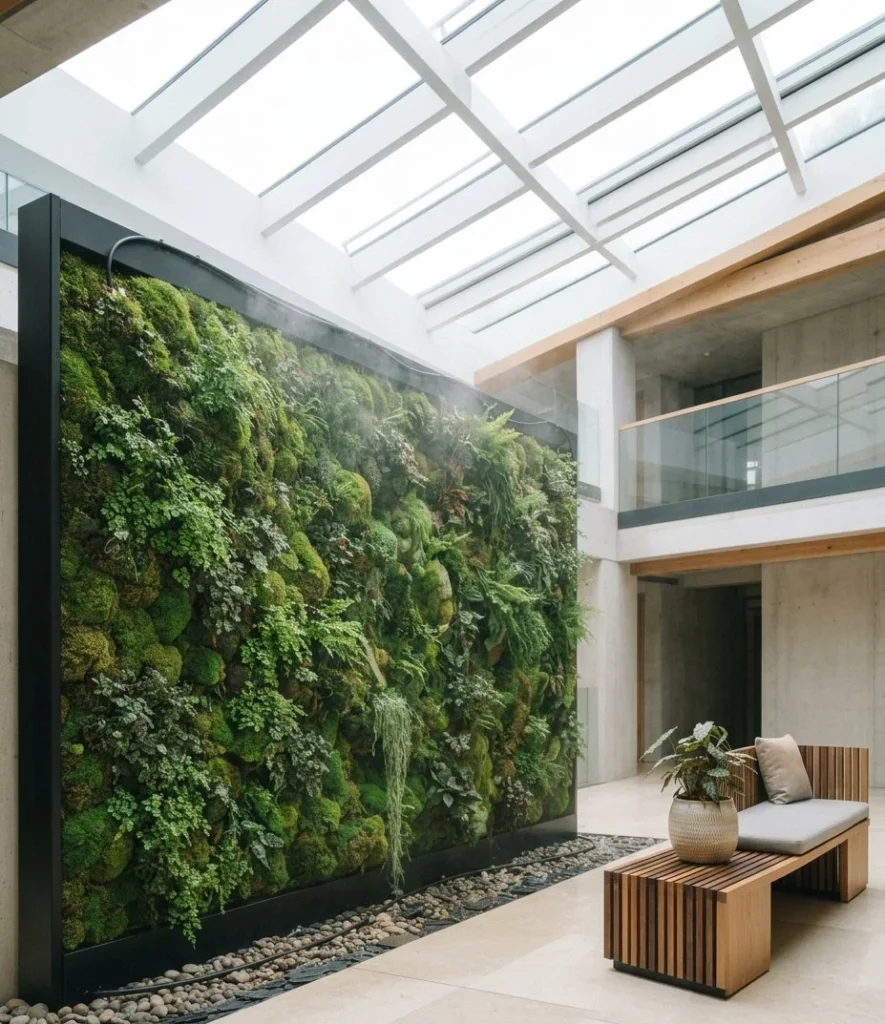
A true living moss wall, built into a frame with an integrated misting or drip irrigation system, stays genuinely alive and actively growing rather than simply preserved in place. This is a real commitment compared to preserved options but delivers an authentic, evolving piece that changes subtly with the seasons.
Living moss needs humidity levels genuinely above 60 percent to thrive, a standard indoor room rarely holds that naturally, so the irrigation and humidity system isn’t optional here the way it might be for other houseplants.
3. Moss Wall Logo or Signage Display
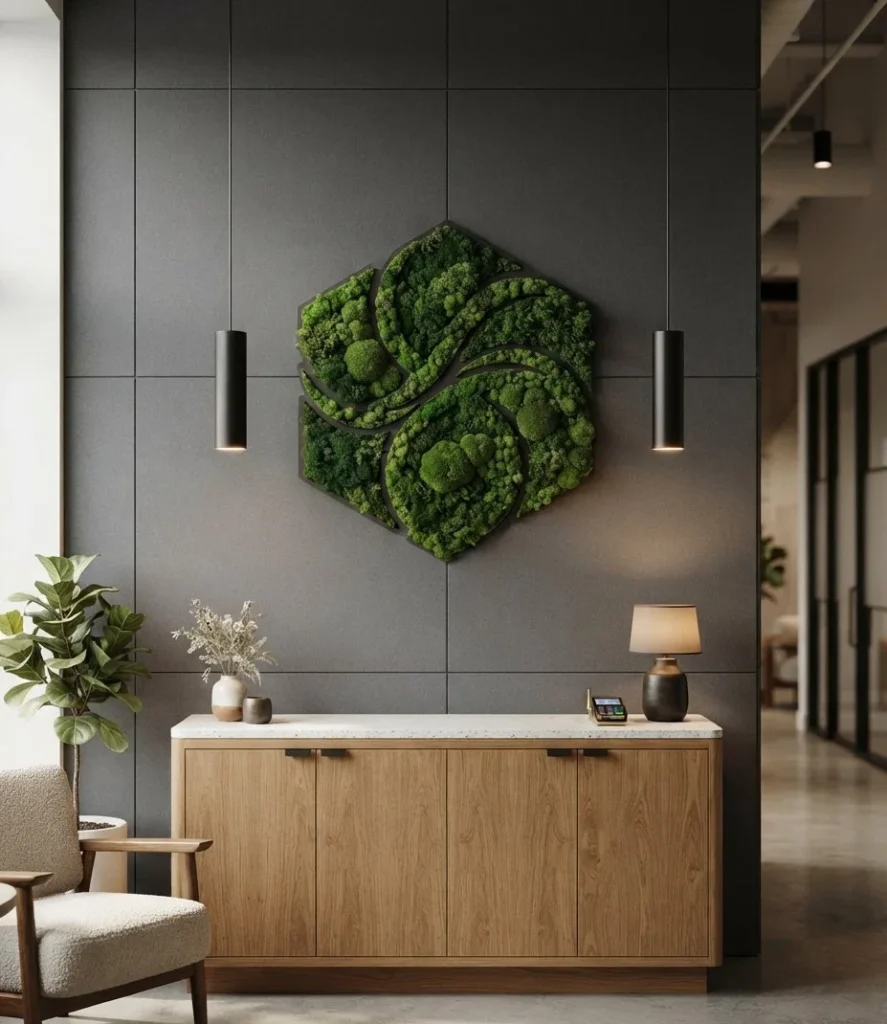
A logo or word cut from preserved moss and mounted on a contrasting wood or metal backing creates a genuinely striking, organic signage piece for a reception area or home office. The living texture reads as far more premium than a printed or painted sign in the same spot.
Laser-cut acrylic templates genuinely simplify getting clean letter edges, freehand cutting preserved moss sheets tends to leave rough, uneven lines that are hard to correct after the fact.
4. Moss and Wood Slat Combination Wall
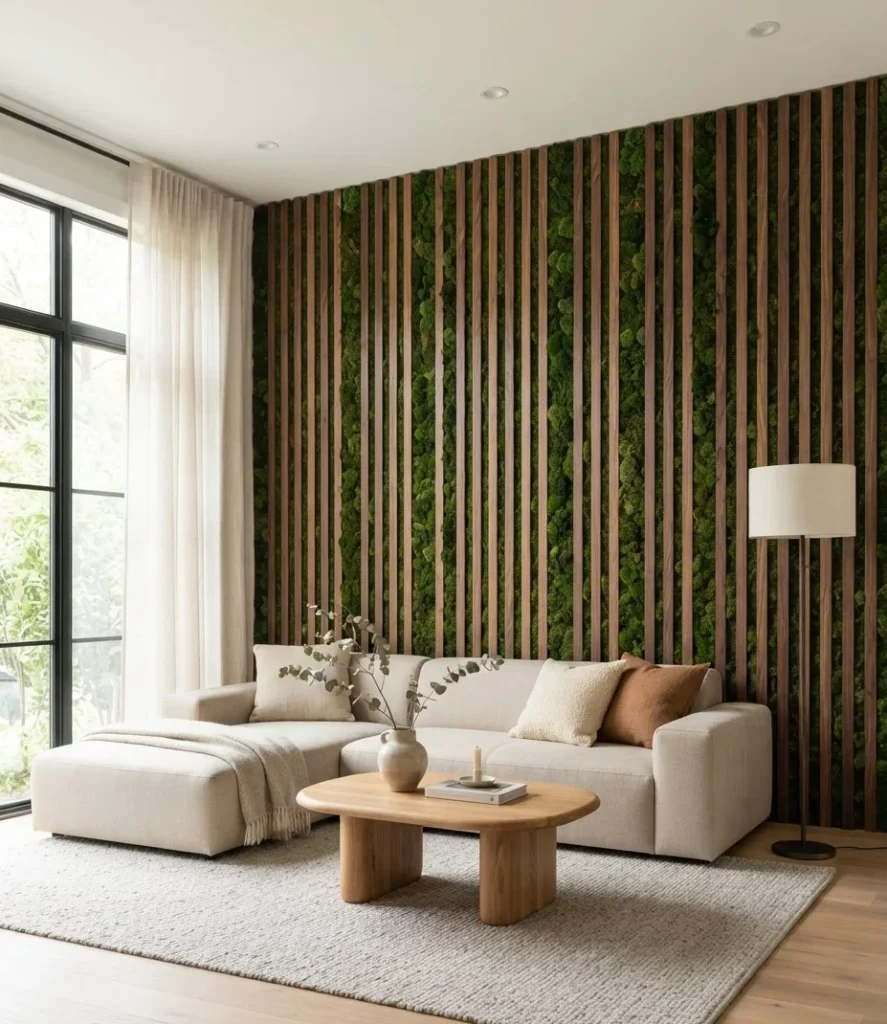
Alternating strips of preserved moss with vertical wood slats builds real textural contrast, the moss’s soft, organic surface set directly against the wood’s clean, linear lines. This pairing genuinely suits a modern or Scandinavian-leaning room better than an all-moss surface would on its own.
Match the wood tone to existing furniture in the room before committing, a mismatched slat tone is harder to correct after installation than swapping out a smaller decor piece would be.
5. Moss Wall Headboard
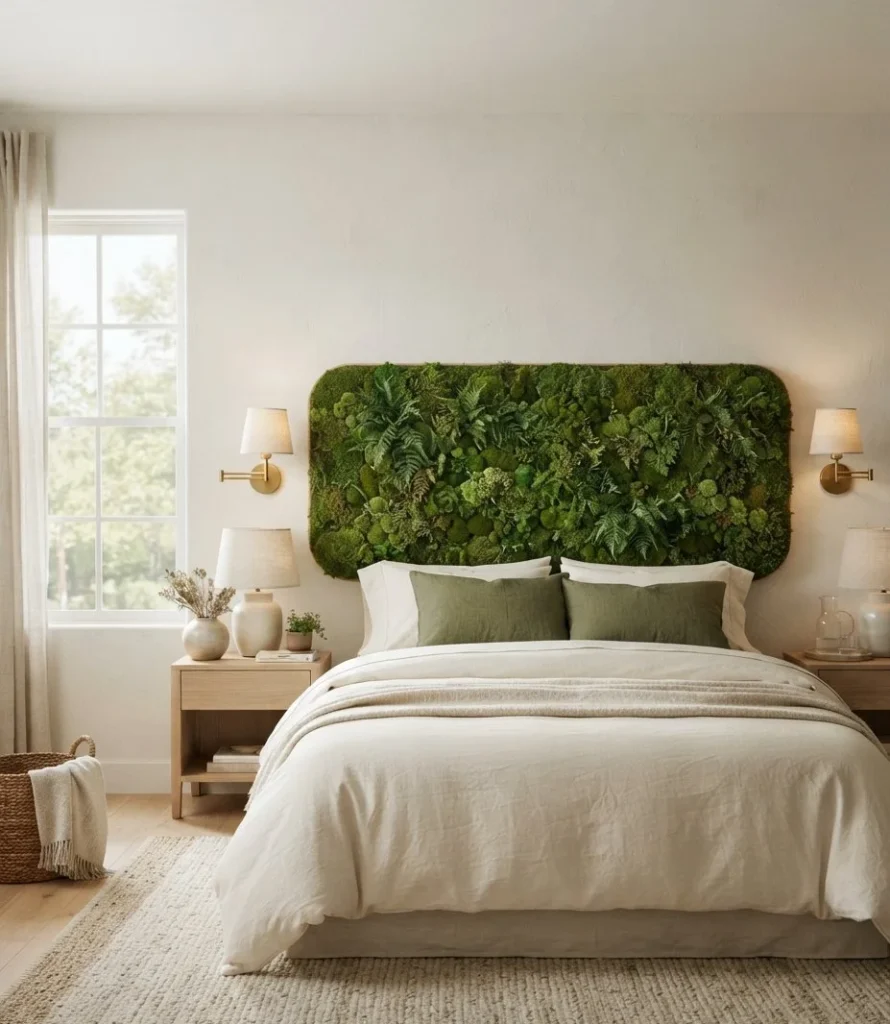
A preserved moss panel mounted at headboard height turns the wall behind the bed into a genuinely soft, natural focal point without any of the bulk a real upholstered headboard would add to a smaller bedroom. It also brings real acoustic softening to the room, moss panels genuinely absorb sound better than a flat painted wall.
Size the panel to extend at least 6 inches beyond the bed frame on each side, a moss panel sized exactly to the mattress width tends to look undersized once the bedding and pillows are in place.
6. Moss-Framed Mirror
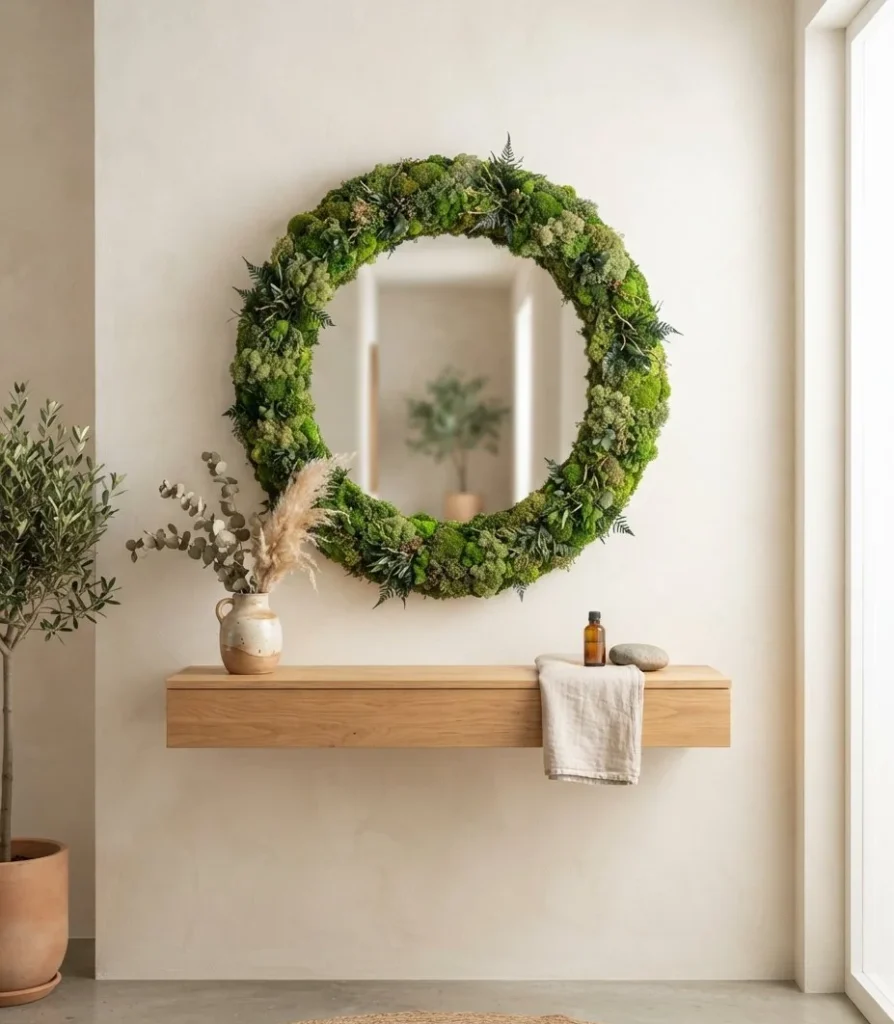
A ring of preserved moss built up around a round or oval mirror creates a genuinely organic alternative to a standard wood or metal frame, the soft green edge contrasting beautifully against the mirror’s clean reflective surface. This is a smaller-scale project that still delivers real visual impact.
Build the moss ring on a separate backing board with a center cutout, then mount the mirror on top, this genuinely makes future mirror cleaning or replacement far easier than gluing moss directly around an installed mirror.
7. Geometric Moss Wall Art
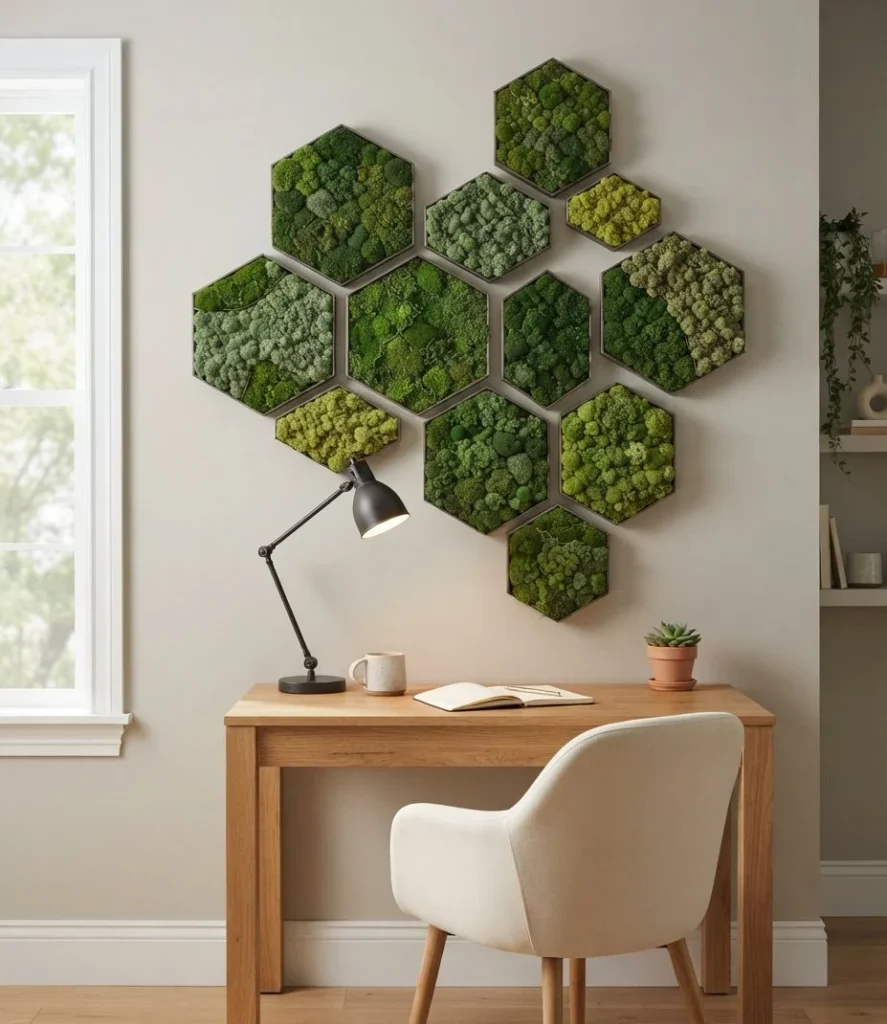
Individual hexagon or diamond-shaped preserved moss panels arranged into a larger geometric pattern deliver real modularity, letting you start with a few panels and genuinely expand the piece later without redoing the whole installation. This modular approach also makes eventual panel replacement far simpler than a single continuous sheet.
Stagger the moss species or shade slightly between panels, uniform coloring across every single hexagon reads as artificial in a way natural variation genuinely avoids.
8. Moss-Covered Fireplace Surround
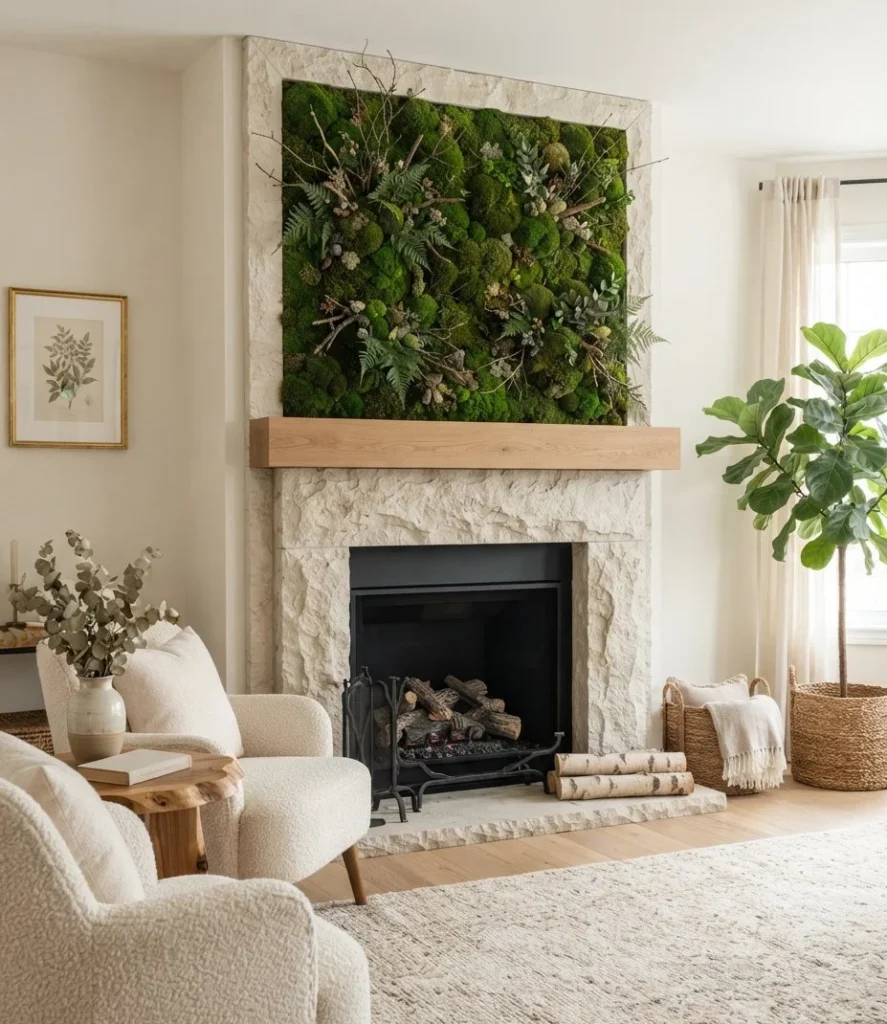
Preserved moss applied to the wall surface directly above a fireplace mantel brings genuine natural texture to a spot usually reserved for a mirror or single piece of art. The contrast between the moss’s soft green and the fireplace’s typically hard stone or brick surround creates real visual interest.
Confirm real clearance from the firebox opening before installing, moss needs to sit outside any heat-affected zone the fireplace manufacturer specifies for combustible materials.
| Material | Preserved moss only, never living moss near heat |
| Clearance | Follow manufacturer’s combustible material zone |
| Mounting | Heat-resistant construction adhesive |
| Maintenance | Dust gently every few months, no water |
9. Moss Wall Home Office Backdrop
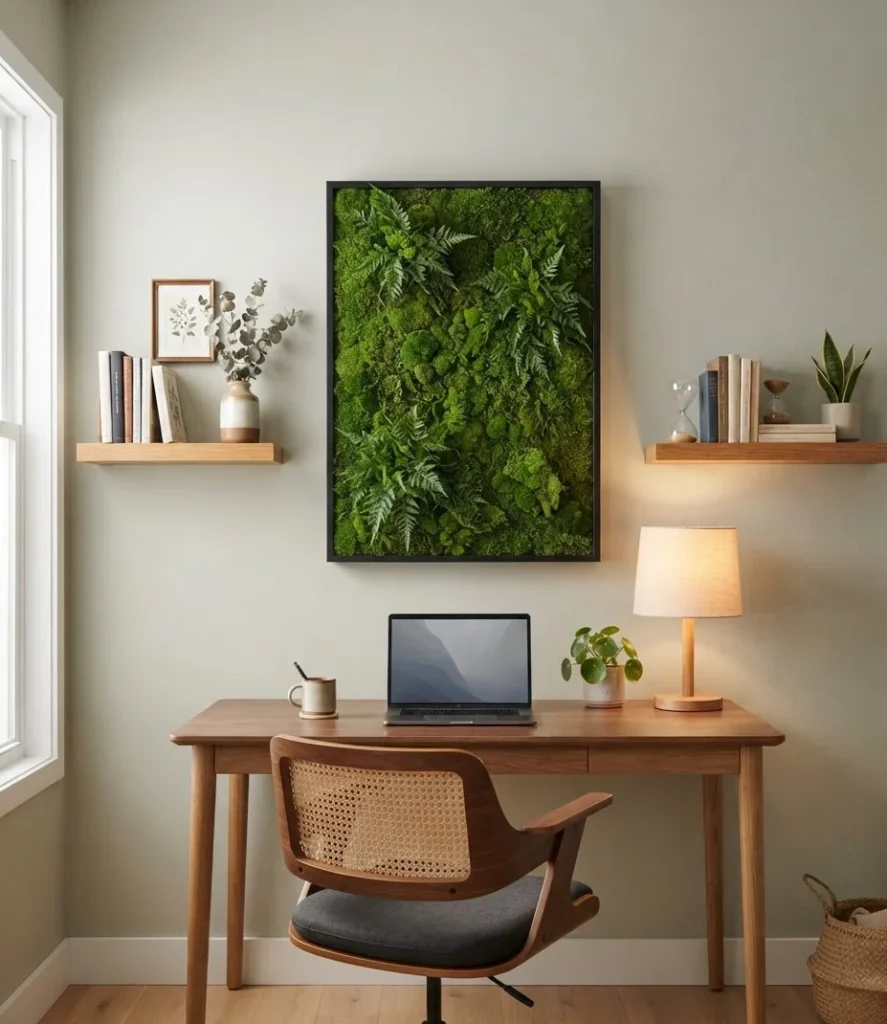
A moss panel mounted behind a desk creates a genuinely striking video call backdrop, the texture and depth reading far better on camera than a flat painted wall or a generic bookshelf setup most home offices default to. It also brings real acoustic benefit to a room where clear audio genuinely matters.
Position the panel to catch soft, indirect light from a window rather than direct overhead lighting, harsh top-down light flattens the moss’s natural texture on camera.
10. Moss Wall Room Divider
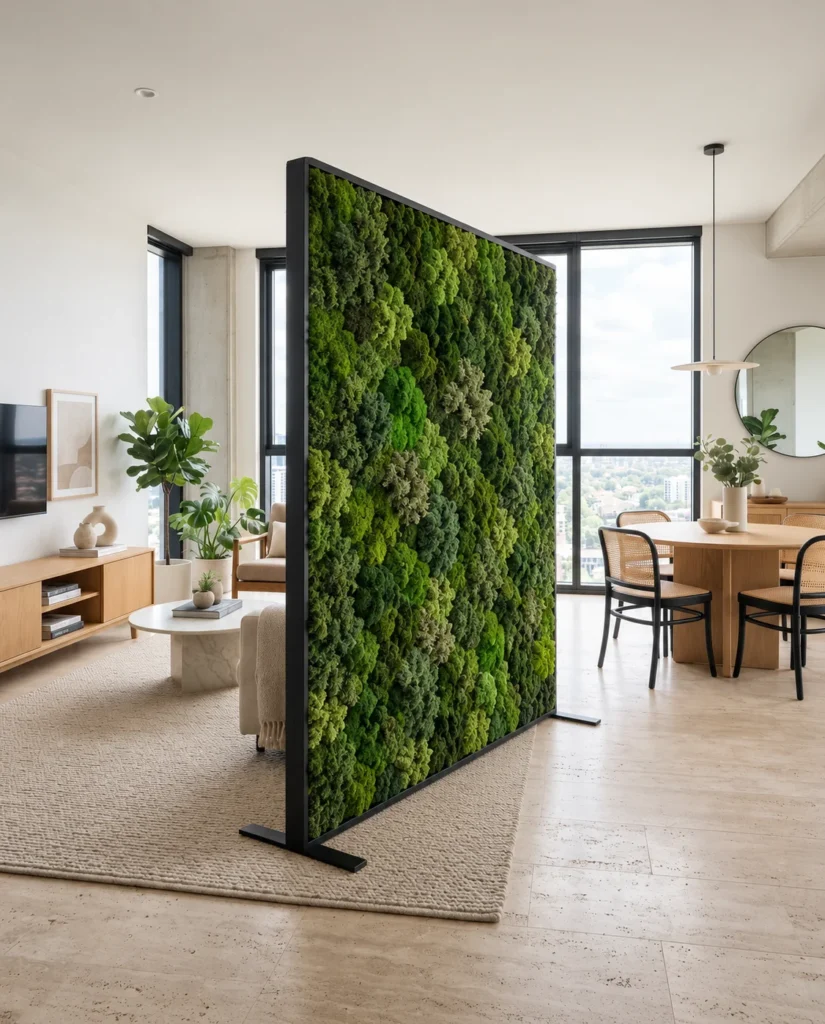
A freestanding, double-sided moss panel on a simple base genuinely divides an open-concept space without the visual heaviness a solid wall or bookshelf divider brings. Both sides can be finished, letting the piece work as a real design feature from either room it separates.
Build the frame from steel angle rather than wood for a freestanding piece this size, wood framing genuinely warps over time under the moss’s weight without real cross-bracing.
11. Moss Wall with Integrated Planter Pockets
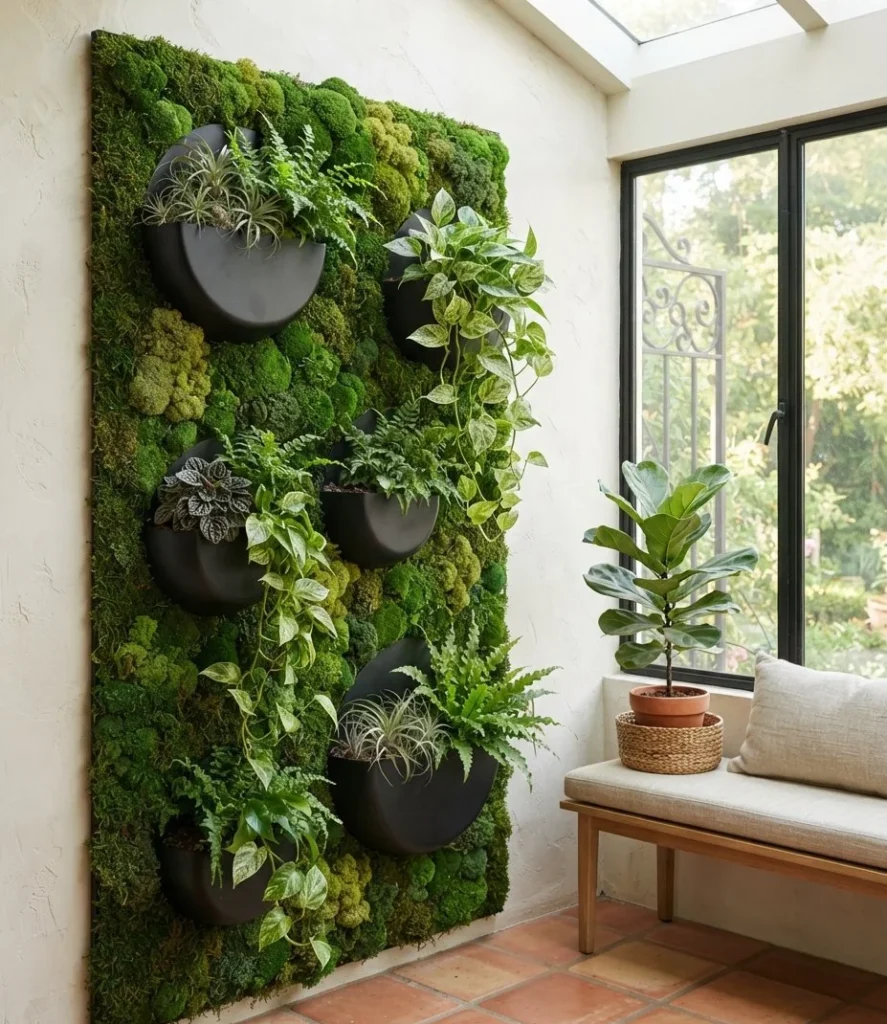
Small planter pockets built directly into a moss wall frame, holding trailing succulents or air plants, add genuine living dimension against the preserved moss backdrop. This combination gives you the low-maintenance benefit of preserved moss with a few real living accents mixed in.
Line each pocket with a plastic liner before adding soil, preserved moss genuinely doesn’t tolerate direct soil moisture contact and will develop mold where the two materials touch without a barrier.
12. Moss Ceiling Accent Panel
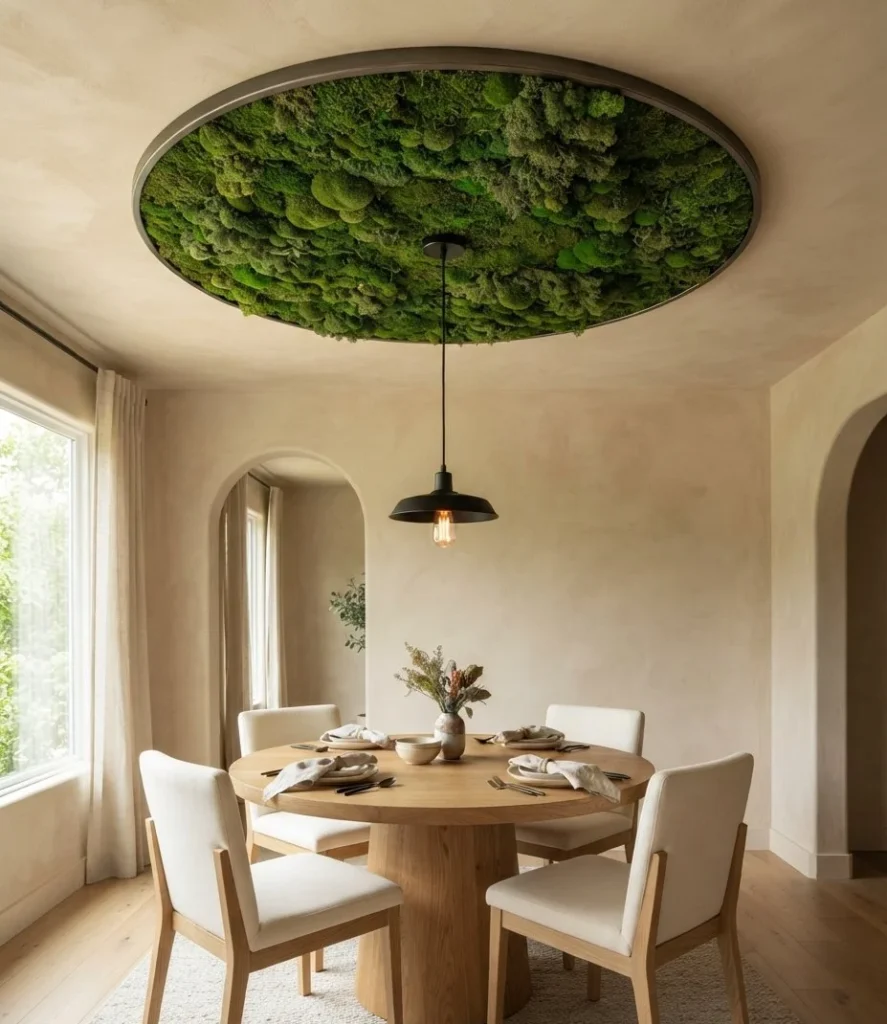
A preserved moss panel mounted overhead, above a dining table or reading nook, brings genuine unexpected texture to a surface almost nobody decorates. Looking up into a soft green panel rather than flat drywall creates a real moment of surprise in an otherwise ordinary room.
Use construction adhesive rated specifically for overhead application, standard adhesive meant for vertical walls can fail under gravity over time on a ceiling installation.
13. Preserved Moss Bathroom Wall
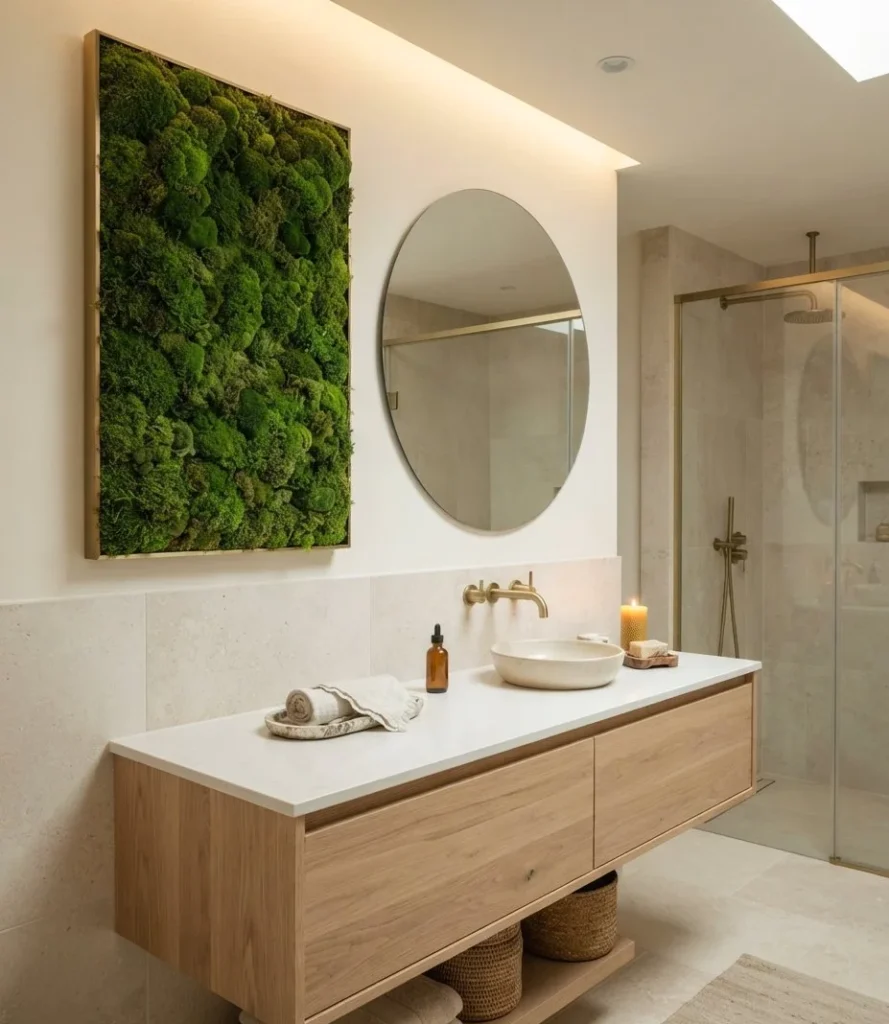
A preserved moss panel in a bathroom, positioned away from direct shower spray, genuinely tolerates the room’s natural ambient humidity well and brings a real spa-like quality most bathroom decor never quite reaches. The material’s natural resistance to mold actually benefits from moderate humidity rather than suffering from it.
Keep the panel at least 3 feet from the shower or tub specifically, ambient humidity is genuinely fine but direct water contact will damage the glycerin preservation treatment.
14. Mixed-Species Vertical Moss Garden
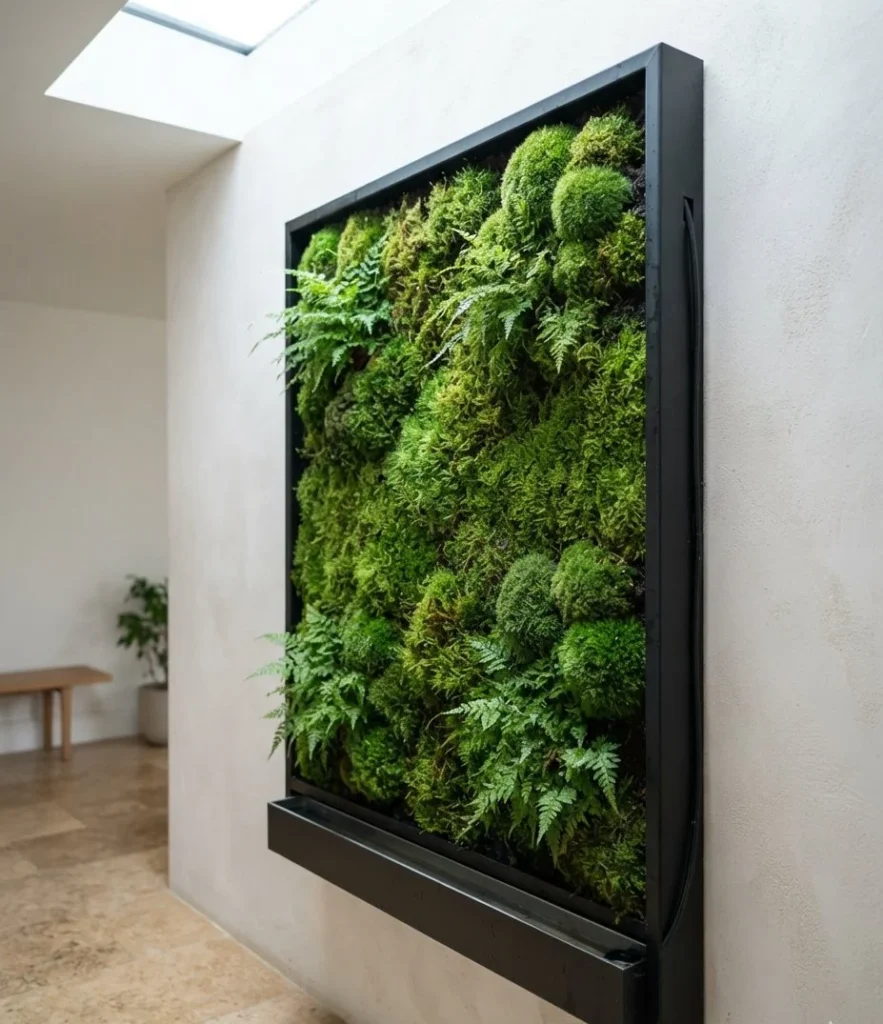
Combining several living moss species, cushion moss, fern moss, and sheet moss, in one vertical installation genuinely creates far more textural depth than any single species alone. Each type holds a distinctly different growth habit and shade of green, and that natural variation is what makes a mixed planting read as a real garden rather than a flat green surface.
Group species by moisture need rather than mixing them randomly across the panel, cushion moss and fern moss genuinely have different watering tolerances and will struggle if forced onto an identical irrigation schedule.
15. Moss Wall with LED Backlighting
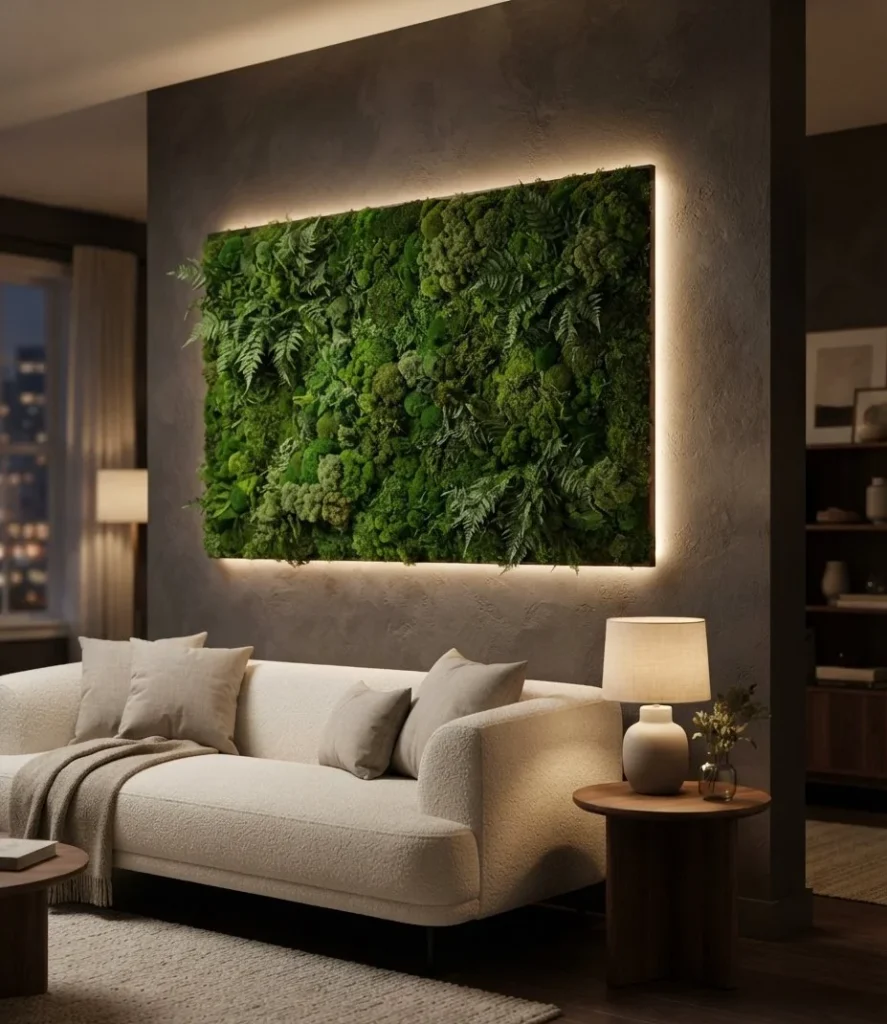
A thin LED strip mounted around the perimeter behind a preserved moss panel creates a genuinely soft, glowing halo effect once the room lights dim, turning a daytime texture piece into a real evening ambiance feature. This works especially well in a living room or bedroom where the wall serves double duty through the day.
Choose warm white LEDs in the 2700K to 3000K range specifically, cooler light temperatures genuinely wash out moss’s natural green tones rather than complementing them.
Final Thoughts
A moss wall earns its striking, natural look when the material choice actually matches what the space can support, preserved moss for genuinely low-maintenance texture, living moss only where real humidity and light can be provided consistently.
Start with a smaller preserved panel to see how the material reads in your specific lighting before committing to a full living wall installation. For more textured accent wall ideas that pair well with the natural, organic feel of moss, our cozy living room ideas guide covers several complementary treatments.
If the backlit panel idea appealed to you specifically, our living room cove lighting ideas guide has more on building that same soft glow effect behind other feature walls. And for a full room built around this same earthy, nature-inspired palette, our green and brown living room ideas guide is a great next stop.
Frequently Asked Questions
Does preserved moss need any water or sunlight?
No, preserved moss is treated with a glycerin solution that keeps it soft and vibrant without any watering or direct sunlight, and it genuinely lasts 2 to 5 years before needing replacement. Keep it out of direct sun specifically, since that does cause fading and brittleness over time even though the moss itself isn’t alive.
How much humidity does a living moss wall need?
Living moss genuinely needs humidity levels above 60 percent to actively thrive, which most standard indoor rooms don’t hold naturally on their own. This is why a true living moss wall needs a built-in misting or irrigation system rather than occasional hand watering.
Can you install a moss wall in a bathroom?
Yes, preserved moss genuinely tolerates a bathroom’s ambient humidity well, as long as it’s positioned at least 3 feet away from direct shower or tub spray. Direct water contact damages the glycerin preservation treatment, but the surrounding humid air alone won’t cause any issues.
How do you clean a moss wall?
Preserved moss just needs a gentle dusting every few months with a soft brush or a low vacuum setting, never water or liquid cleaners. Living moss walls are self-cleaning in the sense that regular misting keeps dust from settling in the first place.
Is a living or preserved moss wall better for a first project?
Preserved moss is genuinely the better starting point for most people, it requires zero irrigation planning and installs almost like any other wall panel. Living moss delivers a real evolving, alive quality but demands genuine humidity and light management that’s worth building up to once you’ve tried a preserved panel first.