15 Narrow Garden Designs That Make the Most of a Slim Space
A narrow garden, whether it’s a side yard strip between two houses or a slim backyard lot, comes with real design constraints most standard garden advice never addresses.
Limited width changes everything from plant spacing to path placement, and the gardens that actually work lean into that narrowness rather than fighting it.
Below are 15 narrow garden designs built around natural airflow, light, and sightline principles that make a slim space feel intentional rather than cramped.
1. Vertical Trellis Wall Garden
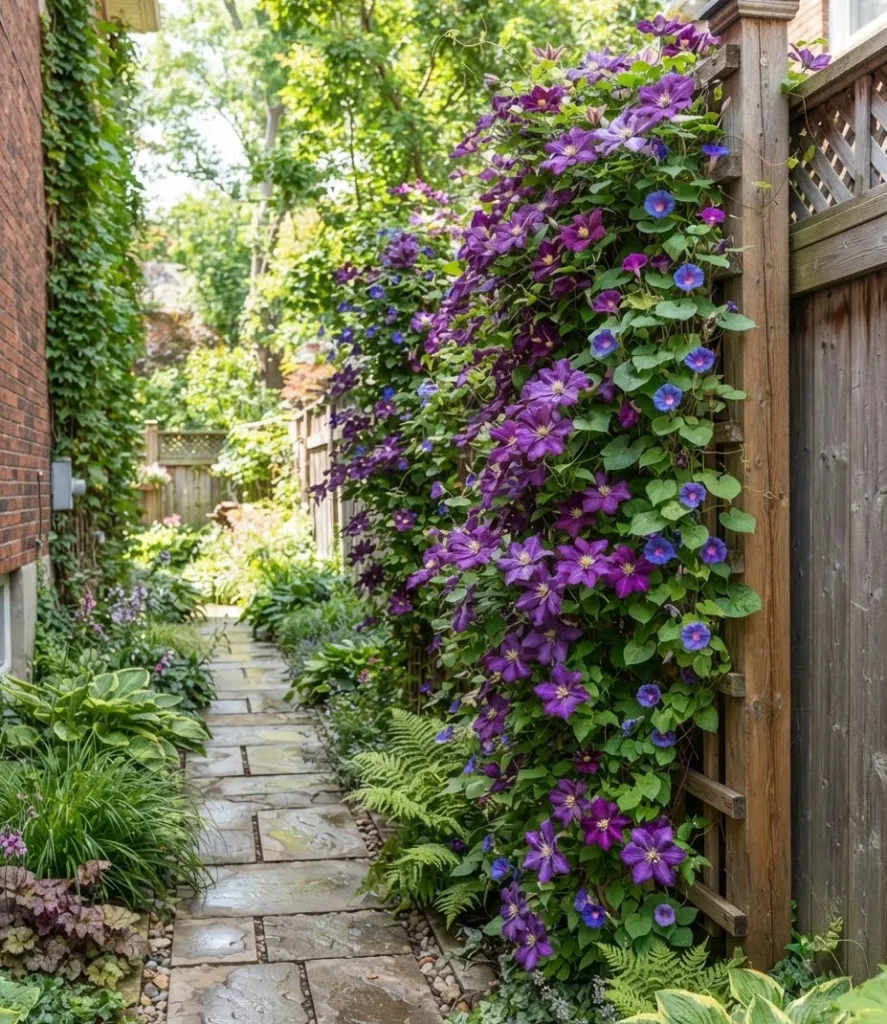
A tall trellis mounted along the fence line turns unused vertical space into natural growing area, letting climbing plants like clematis or morning glory fill height a narrow bed can’t offer in width. This is often the single highest-impact move in a slim garden, since it adds visual volume without ever encroaching on the walking path below.
Choose a trellis at least 6 feet tall for genuine climbing coverage, and anchor it into the fence posts themselves rather than the fence panels, which typically aren’t rated for the added wind load once vines fill in.
2. Stepping Stone Path with Low Groundcover
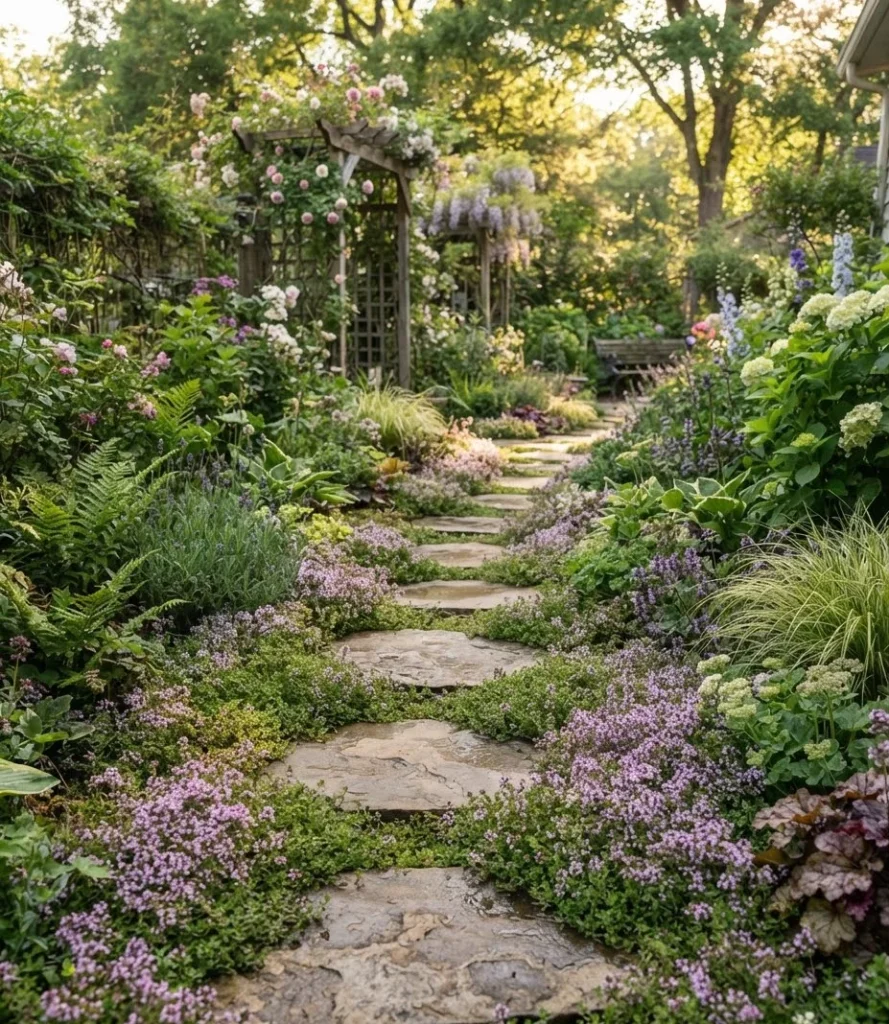
Individual stepping stones set into a low, spreading groundcover like creeping thyme create a path that reads as garden rather than pure hardscape, exceptionally important in a narrow bed where a solid concrete path can feel like it’s eating the whole width. The plant fills the gaps and softens the transition between stone and soil.
Space stones to match a natural walking stride, roughly 24 to 28 inches center to center, so the path feels comfortable rather than requiring an awkward short step at every stone.
3. Tiered Planter Boxes Along a Fence
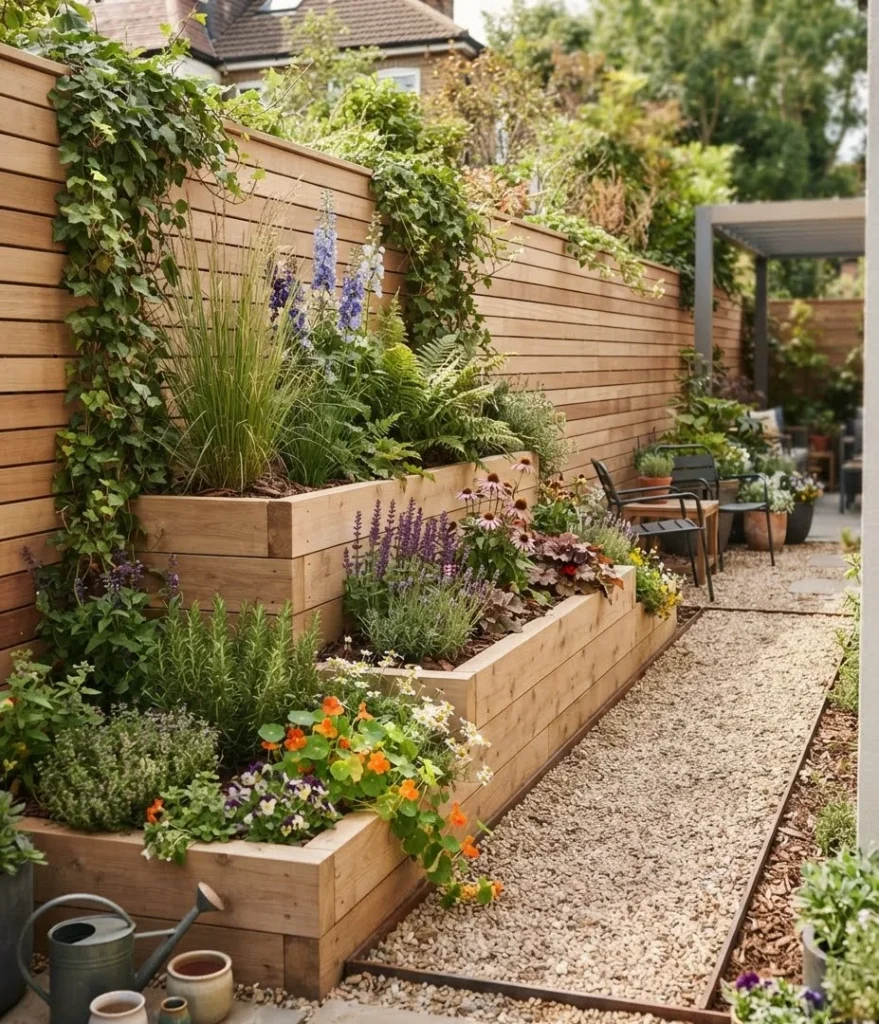
Graduated planter boxes, tallest at the back and shortest at the front, let a narrow bed hold real plant diversity without any one row blocking the light reaching another. This tiered approach Highly solves the light-competition problem that flat, single-level narrow beds run into constantly.
Build boxes with a slight forward lean, about 5 degrees, so rainwater and irrigation naturally reach the front edge instead of pooling against the fence and encouraging rot.
4. Narrow Raised Bed Row
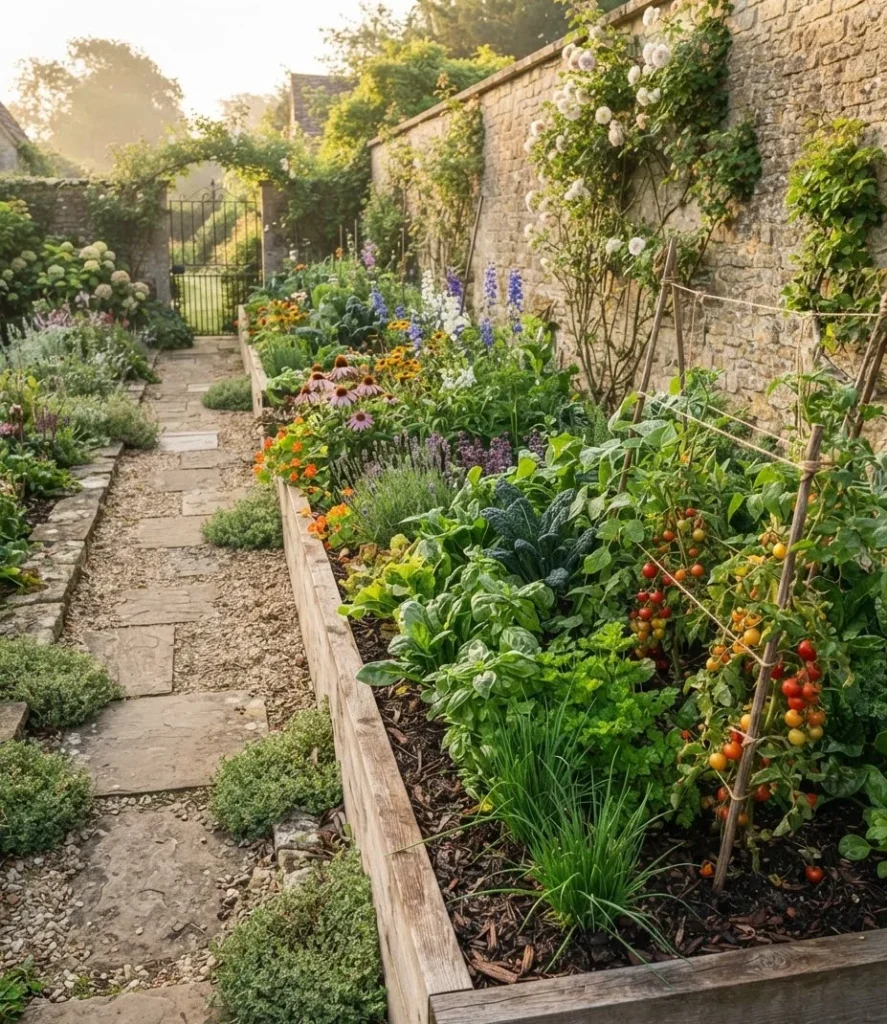
A single raised bed no wider than 2 to 3 feet, running the full length of a narrow lot, gives natural growing depth for vegetables or perennials without ever crowding the walking space beside it. The raised structure also genuinely improves drainage in a side yard, which often inherits runoff from the house roofline above.
Keep the bed’s width reachable from one side only if a wall or fence runs along the other, this determines your true working width more than the bed’s total footprint does.
5. Espaliered Fruit Tree Wall
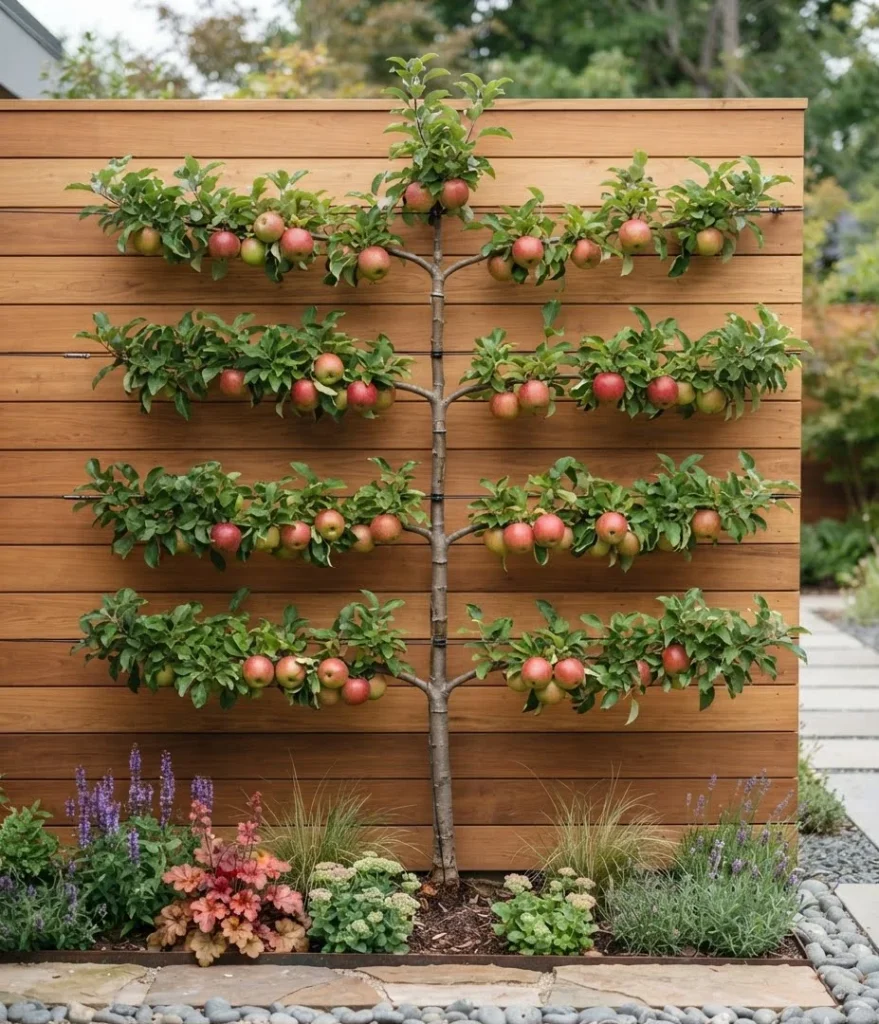
Training a fruit tree flat against a fence or wall using the espalier technique gives a narrow garden natural fruit production without a single tree canopy eating up the walking width. Apple and pear varieties take to this training method especially well and can produce a exceptionally full harvest from a footprint just inches deep.
Choose a dwarf rootstock specifically, standard rootstock trees fight the flat training and need far more aggressive, ongoing pruning to stay in form.
6. Gravel Path with Ornamental Grasses
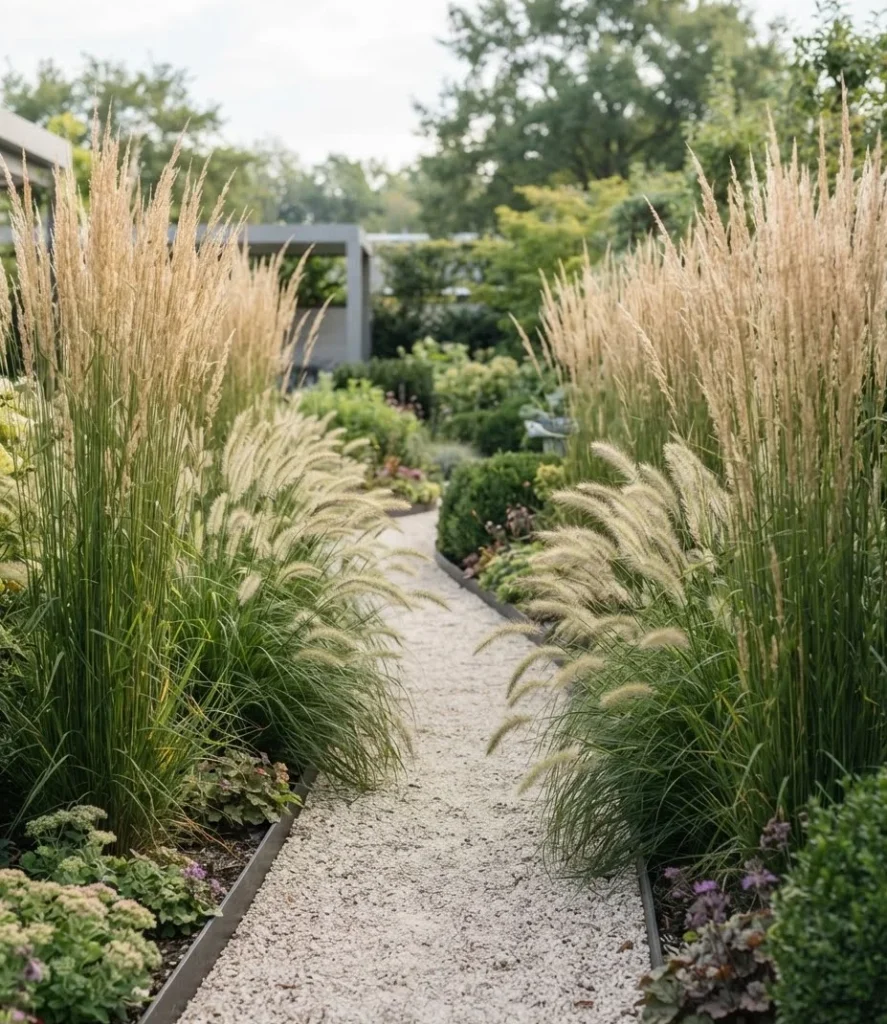
A crushed gravel path bordered by feathery ornamental grasses like feather reed grass or fountain grass brings genuine movement and texture to a narrow strip without the maintenance a lawn or dense planting bed would demand. The grasses’ vertical habit also visually elongates the space rather than widening it, which reads well in a exceptionally narrow footprint.
Lay landscape fabric under the gravel specifically, skipping it lets weeds establish through the stone within a single season in most climates.
7. Hanging Basket Wall Display
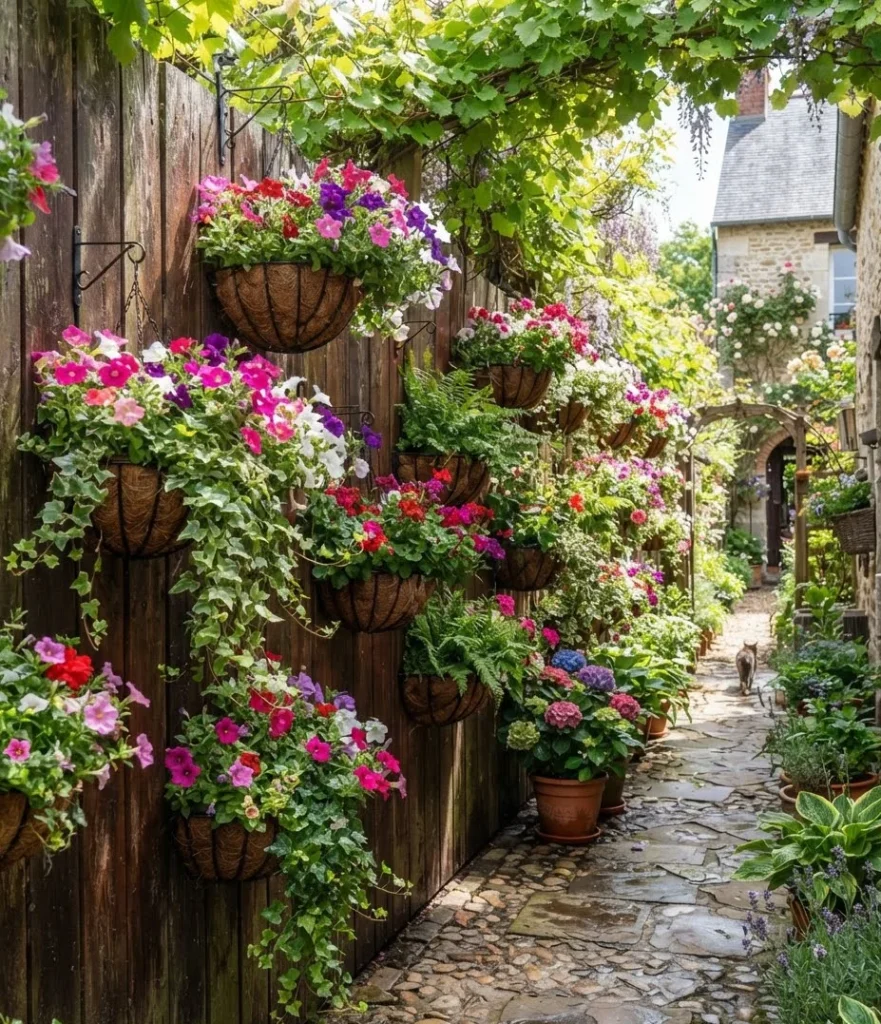
A row of hanging baskets mounted at staggered heights along a fence adds natural color and seasonal variety to a narrow garden without a single plant touching the ground level. This is one of the fastest ways to add genuine visual interest to a side yard that gets used mainly as a walkway.
Choose self-watering basket inserts specifically, a hanging display along a narrow path is genuinely easy to forget to water compared to ground-level beds you pass more slowly.
8. Narrow Rill Water Feature
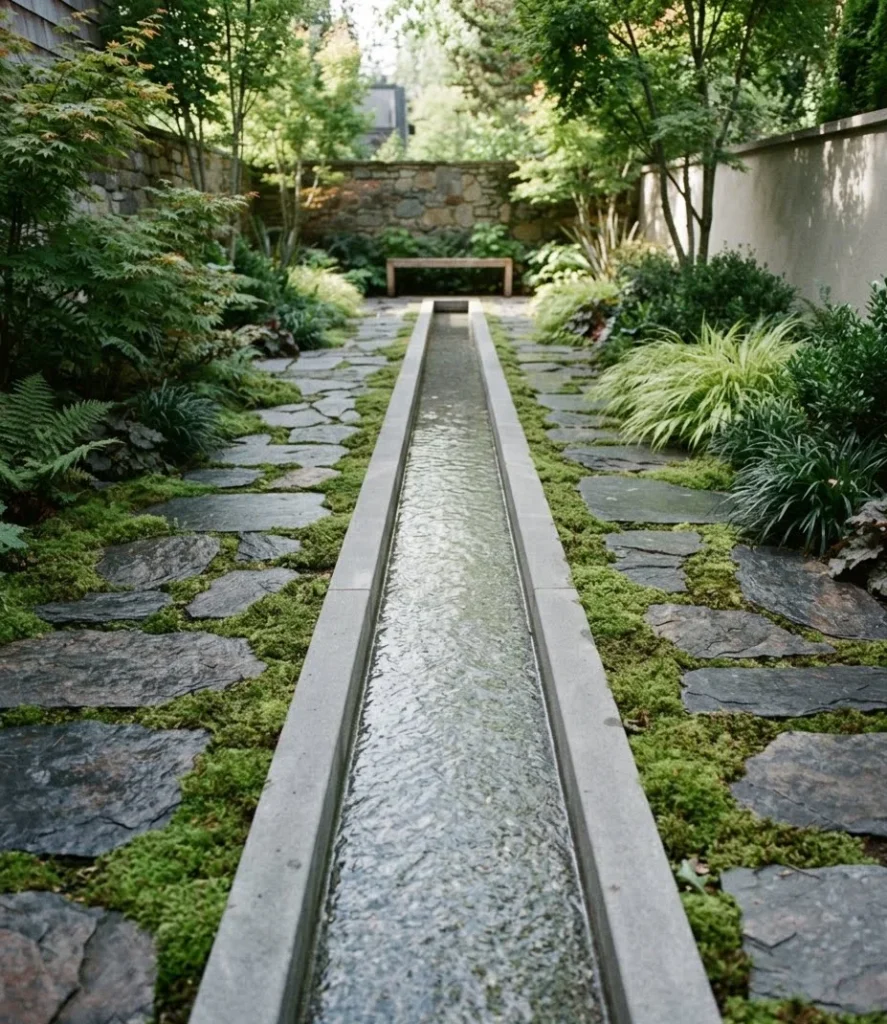
A rill, a slim, shallow water channel typically 6 to 12 inches wide, running the length of a narrow garden brings genuine sound and movement to the space without demanding the width a pond or larger fountain would need. This is a classic formal garden device precisely because it fits narrow footprints so naturally.
Recirculating pump systems crucial simplify upkeep here, a rill with a fresh water source needs true plumbing, while a recirculating design just needs occasional topping off.
| Typical Width | 6 to 12 inches |
| Depth | 2 to 4 inches, shallow by design |
| Pump Type | Recirculating, low-flow |
| Maintenance | Seasonal cleaning, occasional refill |
9. Layered Shade Planting for a Side Yard
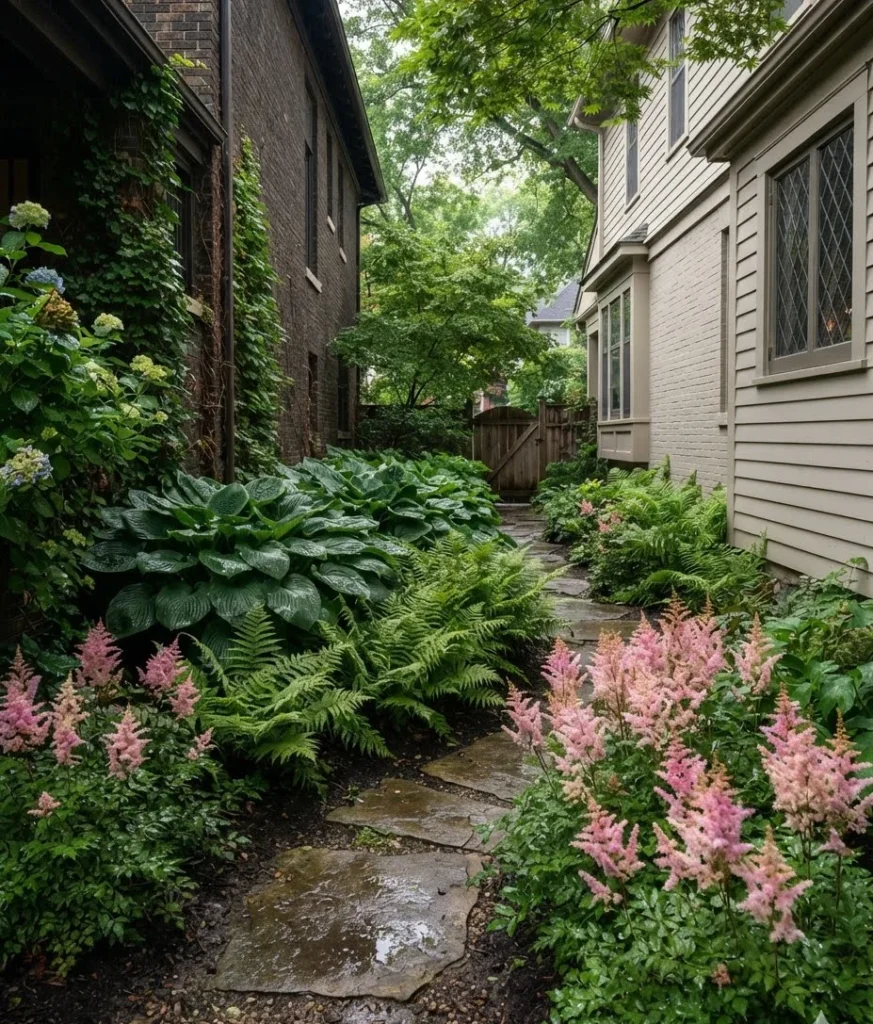
A narrow side yard between two houses often sits in natural shade for much of the day, and layering hostas, ferns, and astilbe by height, tallest against the wall, shortest at the path edge, turns that limitation into a Crucial lush, textured planting. This layout mirrors the tiered planter box logic above but works directly in the ground.
Confirm your specific shade level before choosing plants, dense shade under a second-story overhang needs remarkably different species than the dappled shade further from the house wall.
10. Mirror Wall to Visually Widen the Space
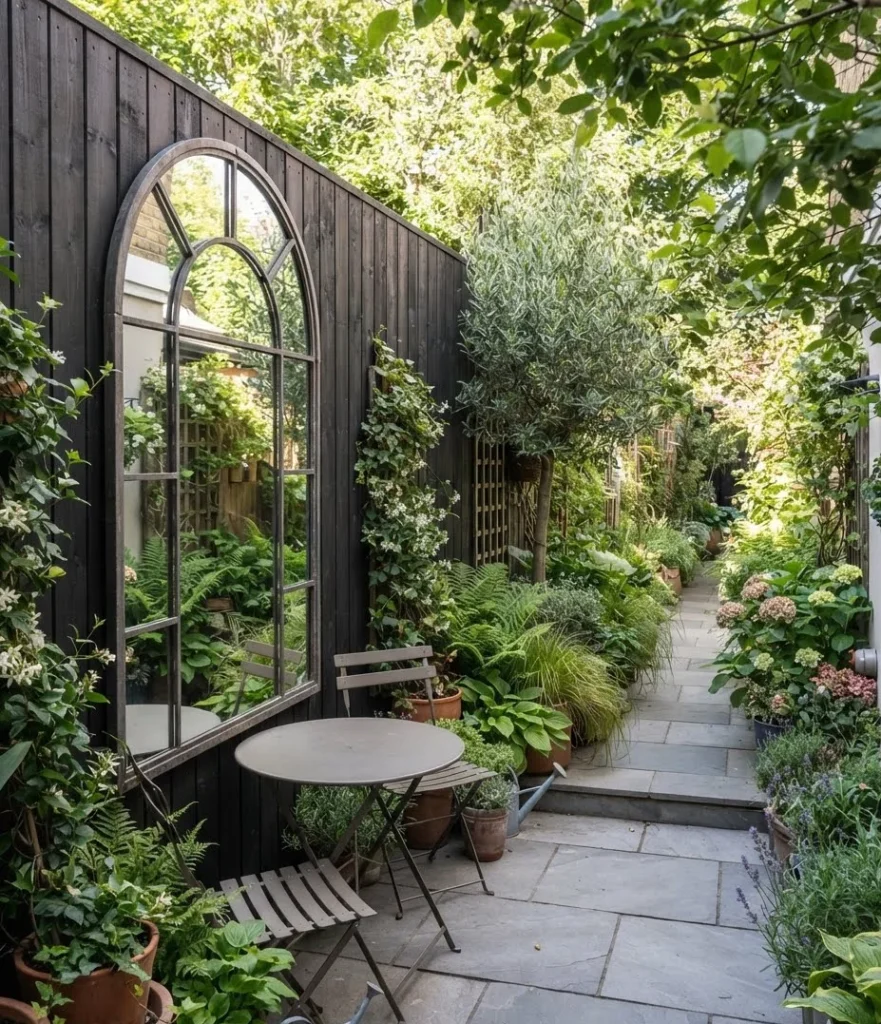
A weatherproof outdoor mirror mounted on a fence remarkably doubles the perceived width of a narrow garden, reflecting the planting bed back and creating an illusion of natural depth that no amount of clever planting alone can achieve. This is one of the single most dramatic tricks available for a truly tight space.
Choose a mirror rated specifically for outdoor use, standard interior mirrors fail within a season once true moisture reaches the backing.
11. Single-File Pollinator Path
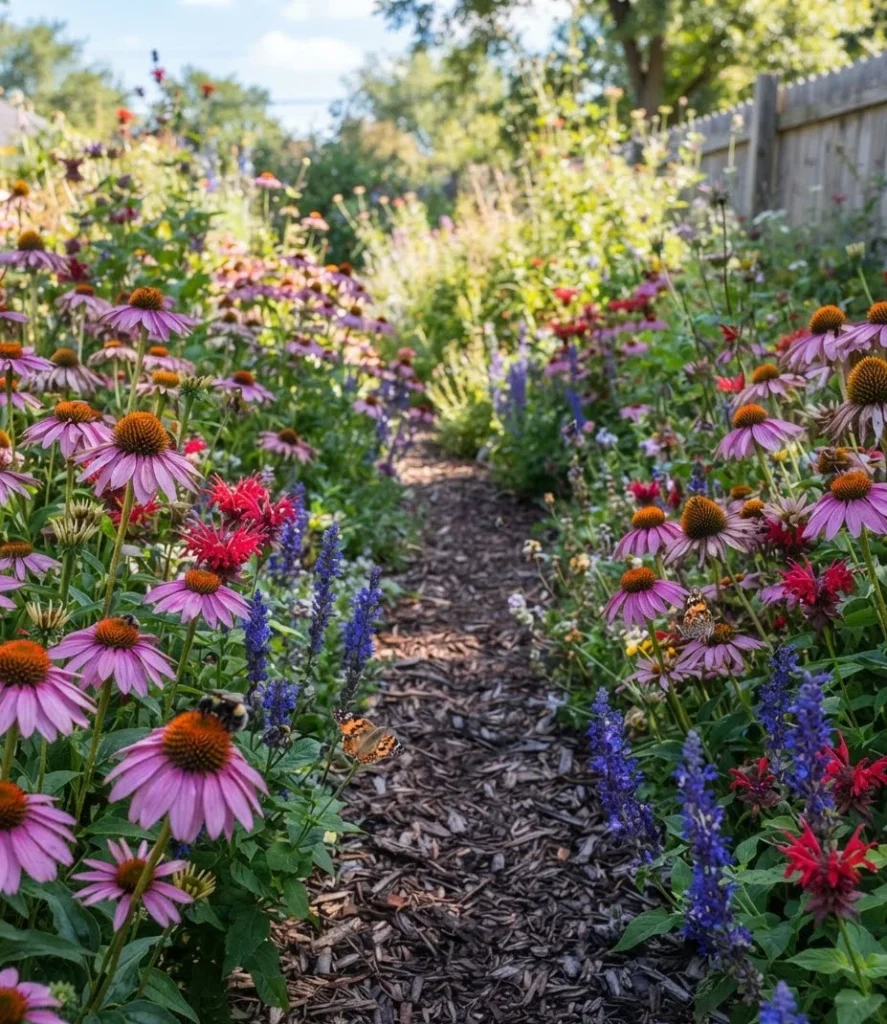
A single-file gravel or mulch path bordered on both sides by pollinator plants like coneflower, salvia, and bee balm turns a narrow garden into genuine habitat, not just a walkway between two houses. The tight width actually works in the plants’ favor here, keeping blooms close enough that pollinators move easily between both sides.
Group plants of the same species in clusters of three to five rather than mixing singly, pollinators find and work clustered blooms far more efficiently than scattered single plants.
12. Vertical Herb Garden Tower
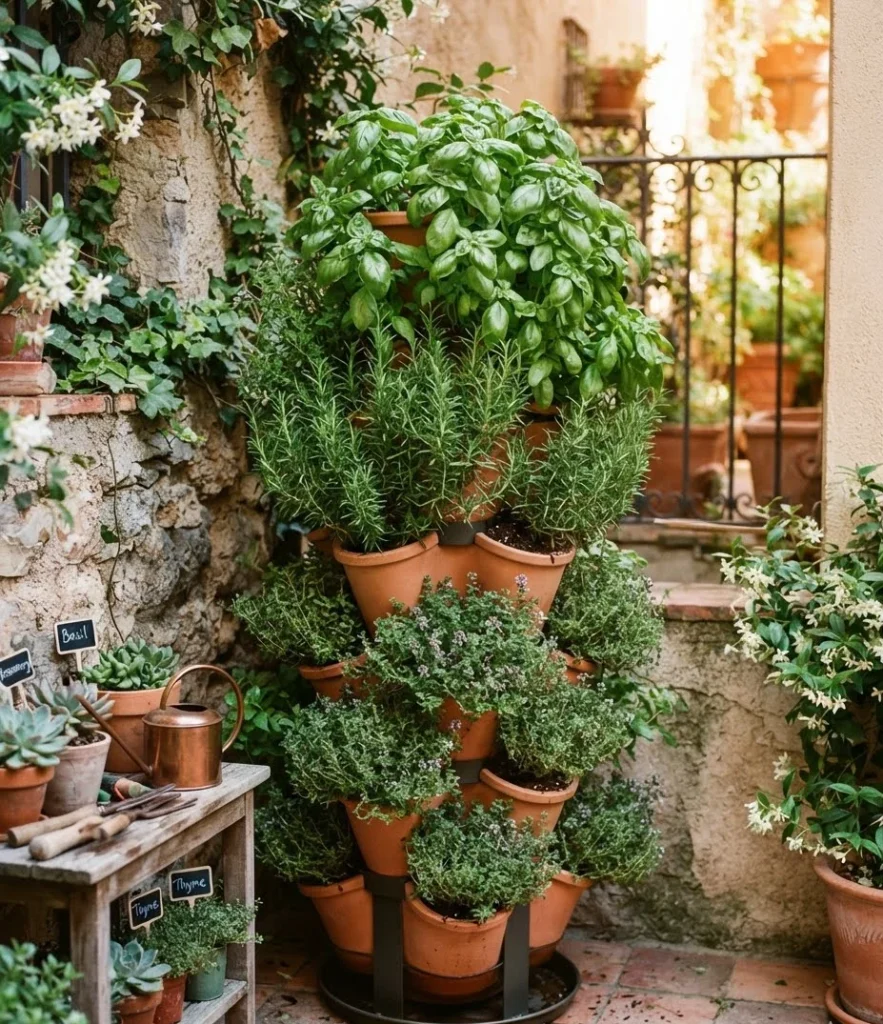
A stacked vertical planter tower, holding basil, thyme, and rosemary in tiered pockets, fits into a corner as small as 2 square feet while still offering real kitchen-herb production. This is genuinely one of the best solutions for a narrow garden with almost no ground footprint to spare at all.
Position the tower where it gets at least 6 hours of direct sun, most culinary herbs remarkably underperform in the partial shade a narrow side yard often provides.
13. Narrow Pergola with Climbing Vines
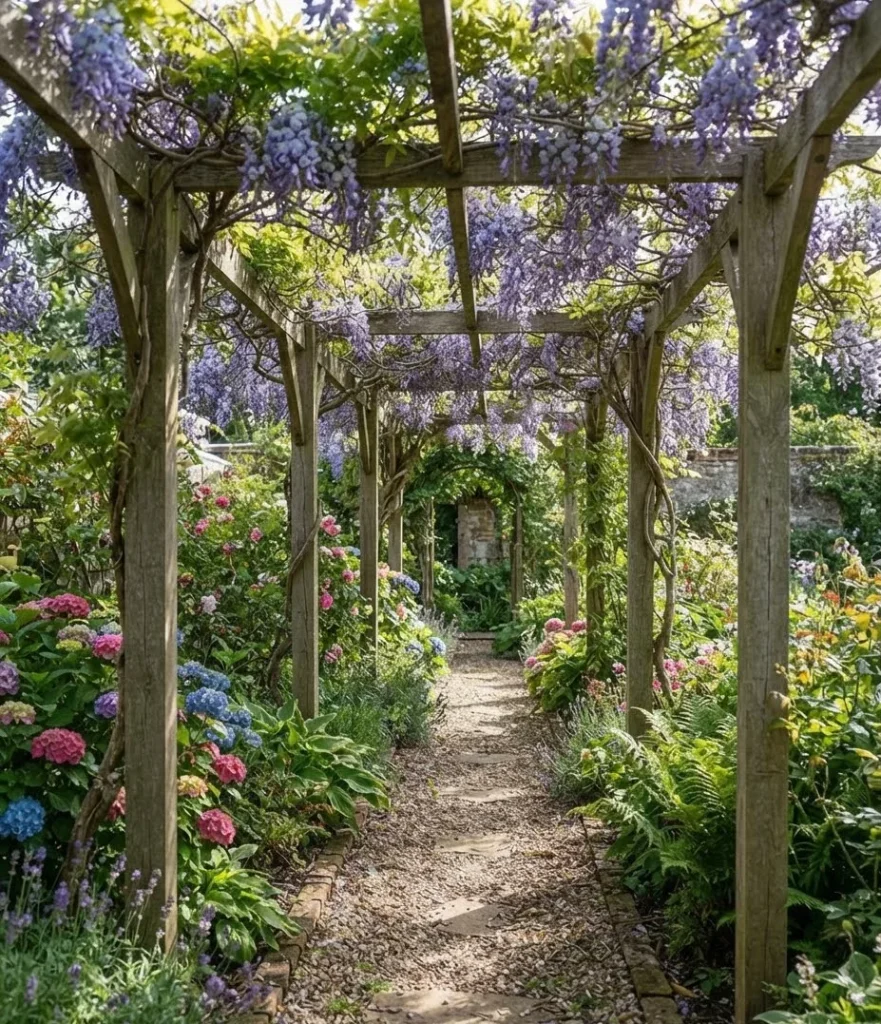
A slim pergola, built to match the path’s actual width rather than a standard wide structure, creates real overhead shade and a sense of enclosure in a narrow garden without eating into the limited ground space below. Wisteria or climbing hydrangea trained across the top truly transforms the walkway into a destination rather than just a passage.
Build the pergola posts flush with the path edges rather than set back into the planting beds, this keeps the actual walking width from shrinking any further than it needs to.
14. Wheeled Container Garden Row
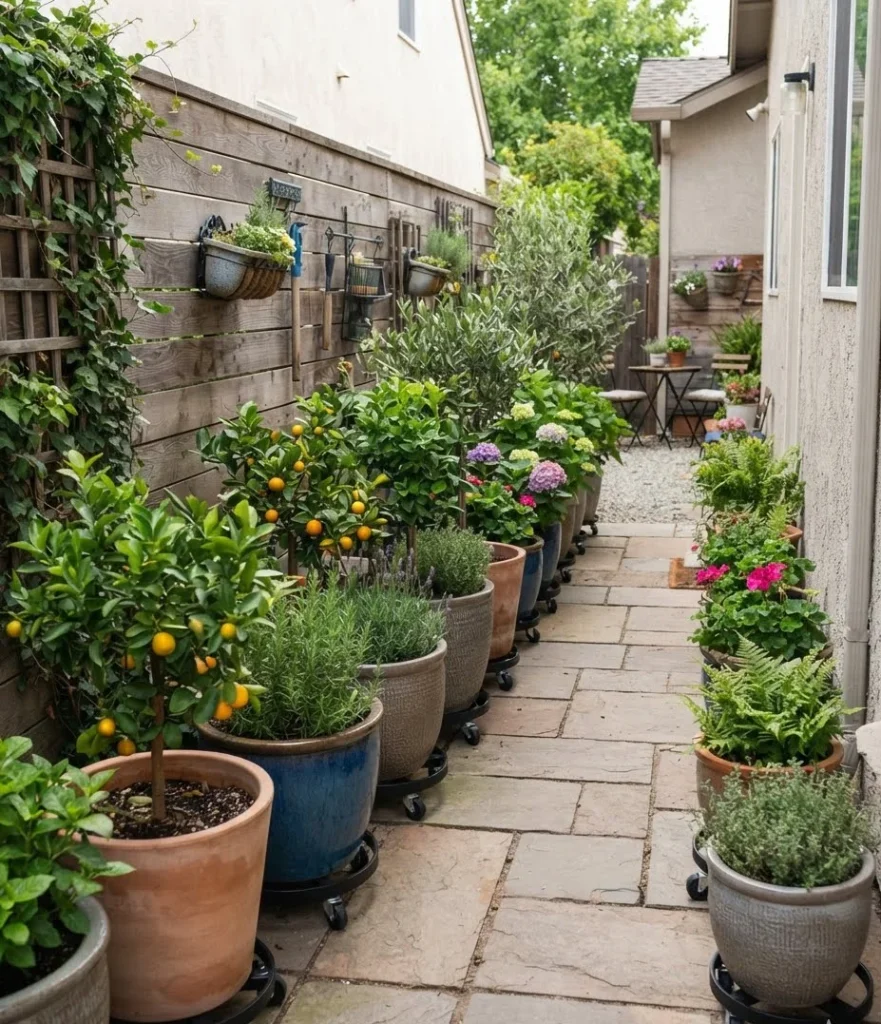
A row of large containers mounted on plant caddies with wheels gives a narrow garden genuine flexibility, letting you shift plants to follow seasonal sun angles or rearrange the whole layout without any digging at all. This works especially well on a rented property or anywhere permanent in-ground beds aren’t an option.
Choose containers at least 16 inches in diameter, anything smaller dries out too fast in a narrow space that often gets more reflected heat off the surrounding walls.
15. Living Wall Panel System
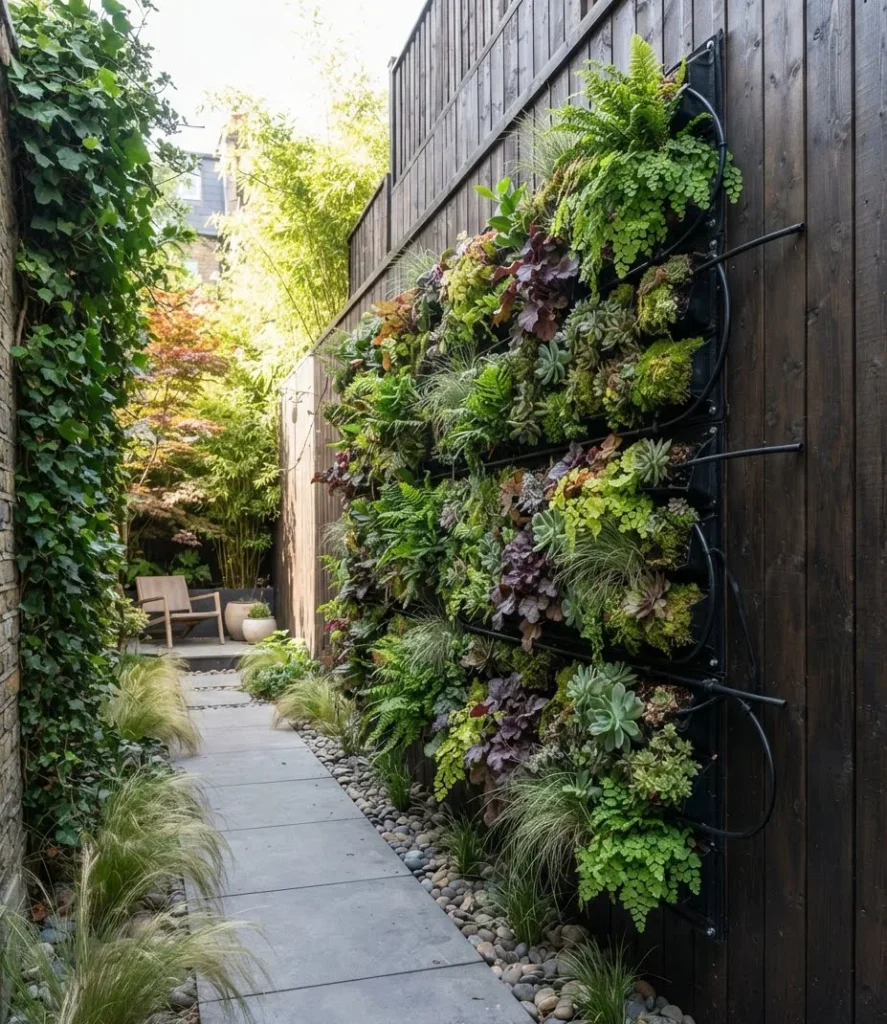
A modular living wall system, pre-planted panels mounted directly to a fence, delivers natural lush coverage in a narrow garden’s most underused resource, the vertical fence plane itself. This is truly the most planting-dense option on this whole list relative to its actual ground footprint.
Confirm the mounting hardware is rated for the panel’s fully saturated weight, a watered living wall panel weighs considerably more than its dry installation weight suggests.
Final Thoughts
A narrow garden succeeds when the design works with the width instead of against it, vertical growing, tiered planting, and a few true optical tricks like the mirror wall do more for a slim space than trying to force in a standard-width layout ever will.
Start with the path itself, since that determines your true working width, then build the planting layers and vertical elements out from there.
For more layout ideas that apply the same space-conscious thinking to a fuller yard, our backyard landscape ideas guide is a good next stop, and if you want to carve out an actual seating spot within a narrow footprint, our garden sitting area ideas guide covers that specifically.
Our patio landscaping ideas guide also has more on hardscape choices that pair well with a slim path like several of the designs above.
Frequently Asked Questions
How wide does a narrow garden path need to be?
A comfortable single-person path needs at least 24 to 30 inches of clear walking width. If two people need to pass occasionally, aim for closer to 36 inches, though a narrow garden often works better with a single-file path and wider planting on either side.
What plants grow best in a narrow, shaded side yard?
Hostas, ferns, astilbe, and heuchera all truly thrive in the shade a narrow side yard between two houses typically provides. Layer them by height, tallest against the wall and shortest at the path edge, for the fullest look in a limited width.
Can you have a water feature in a narrow garden?
Yes, a slim rill running 6 to 12 inches wide fits easily into a narrow footprint and brings true sound and movement without demanding the space a pond or larger fountain would need. A recirculating pump system keeps the upkeep genuinely manageable.
How do you make a narrow garden look wider than it is?
An outdoor-rated mirror mounted on the fence is truly the most dramatic trick available, doubling the perceived width through reflection. Vertical planting, ornamental grasses, and light-colored hardscape also help by drawing the eye up and along the space rather than across its actual width.
Do narrow gardens need less maintenance than wider ones?
Not necessarily, a narrow garden often has less total planting area but can need more frequent attention since the tighter space, reflected heat off nearby walls, and shade patterns from adjacent structures all create more specific care requirements than a standard open bed.