Why Are My Plant Leaves Turning Brown? 10 Fixes That Actually Work
Brown leaves are one of the most common signals a houseplant sends when something is off. It could be watering, light, humidity, or even the pot itself, and figuring out which one is at play makes all the difference in fixing it fast.
This guide walks through the most common causes of browning leaves and exactly what to do about each one, so your plants can get back to looking full and green.
1. Diagnose the Cause Before You Treat It
Brown leaves can come from too much water, too little water, harsh sun, weak soil, or pests. Before changing anything, take a close look at where the browning shows up.
Crispy edges often point to humidity or watering issues, while spotted patches can signal pests or sunburn. Reading these clues first saves you from guessing.
2. Get Your Watering Routine Right
Water issues are behind most browning leaves. Too much water suffocates the roots, while too little leaves them dried out and stressed.
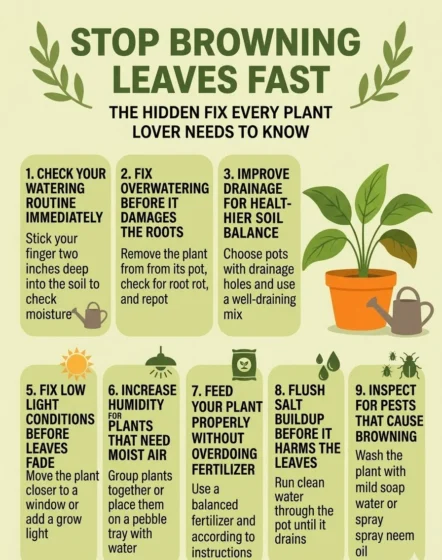
Stick a finger about two inches into the soil before you water. If it still feels damp, hold off a few more days, and if it feels dry, go ahead and water.
3. Rescue a Plant From Overwatering
When soil stays wet too long, oxygen can’t reach the roots and rot sets in. This usually shows up as mushy stems along with brown, limp leaves.
Pull the plant from its pot, trim away any black or mushy roots, and repot it into fresh, dry soil. Most plants bounce back once the excess moisture problem is solved.
4. Upgrade Your Drainage Setup
Poor drainage traps water at the bottom of the pot, which stresses the roots and shows up as browning over time. A pot without drainage holes makes this even harder to manage.
Choose pots that drain freely and mix in perlite or compost for a lighter, well-draining soil blend. Small changes here protect the roots for the long run.
5. Balance Light Exposure
Too much direct sun can scorch leaves into crispy brown patches, while too little light leaves plants weak and dull looking.
Matching each plant to its ideal light level keeps the foliage strong without the stress of either extreme.
6. Boost Humidity for Tropical Plants
Tropical plants rely on moisture in the air, and when humidity drops too low, leaf edges turn brown and crispy.
Grouping plants together, running a humidifier, or setting pots on a pebble tray with water are all simple ways to raise humidity around your plants.
7. Feed Without Overdoing It
Both underfeeding and overfeeding can lead to browning. Too little fertilizer leaves plants weak, while too much can actually burn the roots and scorch leaf tips.
Stick to a balanced fertilizer and follow the label’s instructions rather than guessing at the amount.
8. Flush Salt Buildup From the Soil
Tap water and fertilizers leave behind salts that build up in the soil over time. This buildup often shows up as brown tips and weaker overall growth.
Once a month, run clean water through the pot until it drains freely from the bottom. This flushes out excess salts and gives the roots a fresh start.
9. Check for Pests and Root-Bound Roots
Pests like spider mites, thrips, and aphids weaken plants quickly and often leave behind browning, spots, or sticky residue on the leaves.
A root-bound plant struggles just as much, since tightly circled roots can’t absorb water properly. Check under the leaves for pests and check the roots if growth has slowed.
10. Keep Up With Trimming, Dust, and Temperature
A few small habits go a long way. Trimming brown or damaged leaves lets the plant put its energy into new growth instead, and wiping dust off leaves weekly helps them absorb more light.
Keeping plants away from heaters, air conditioners, and drafty windows also protects them from the temperature swings that trigger stress and browning.
Final Thoughts
Browning leaves are almost always a plant’s way of asking for a small adjustment, whether that’s less water, more humidity, or a better spot near the window. Once you spot the pattern, the fix is usually simple.
Stay consistent with watering, light, and the occasional soil refresh, and your plants should reward you with fuller, greener growth all year round.
FAQ
Why are my plant’s leaves turning brown at the tips?
Brown tips usually point to low humidity, salt buildup from tap water, or inconsistent watering.
Can overwatering cause brown leaves?
Yes, overwatering leads to root rot, which often shows up as mushy stems and browning leaves.
How often should I check my plant for problems?
A quick weekly check helps you catch changes in color, moisture, or texture before they turn into bigger issues.
Should I remove brown leaves from my plant?
Yes, trimming them lets the plant redirect its energy into healthy new growth.
Is direct sunlight bad for all houseplants?
No, it depends on the plant. Succulents tolerate direct light well, while ferns and pothos prefer bright, indirect light.